If you already know how to sell on Walmart and Amazon, you have a real head start. This 2026 playbook shows you how to sell on Walmart Marketplace step by step, what to expect with Amazon vs Walmart selling, and how to launch your first Walmart channel with less guesswork and more repeatable execution.
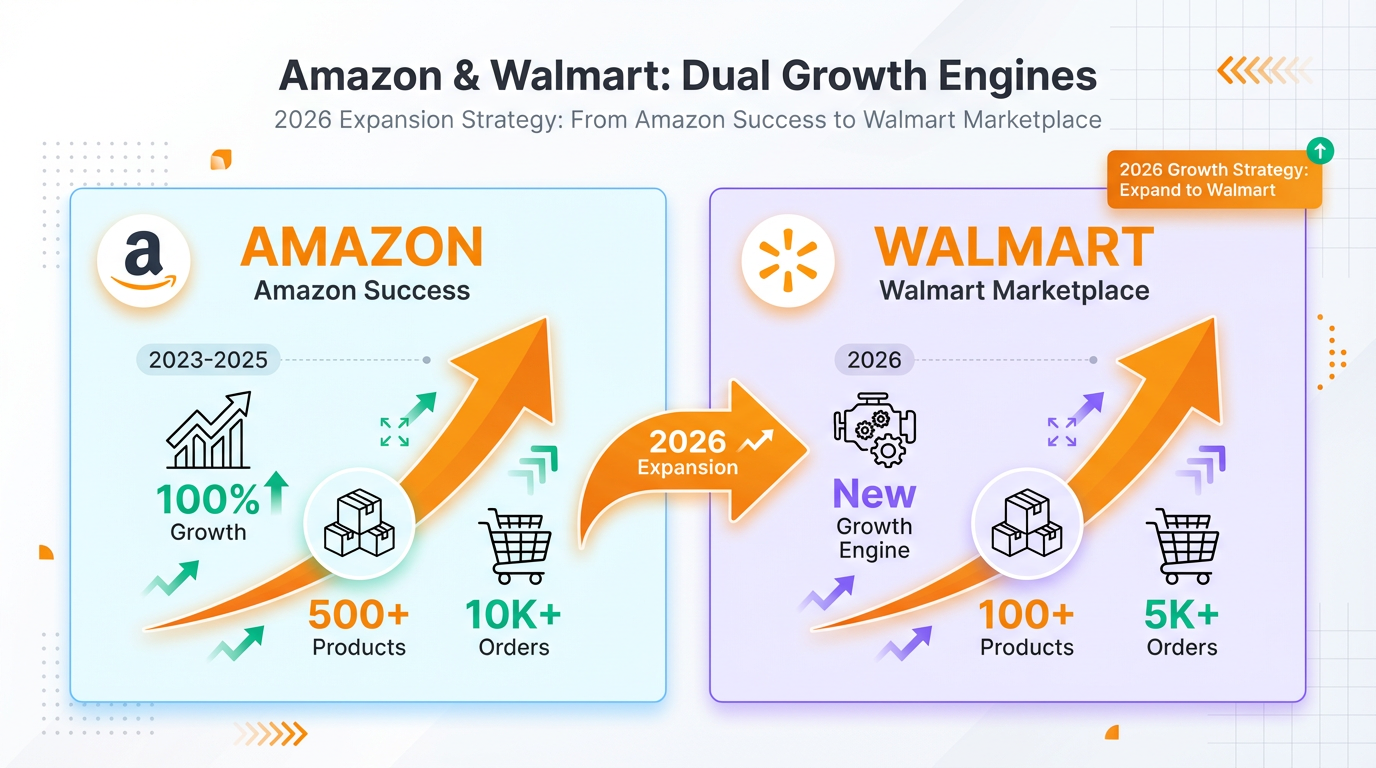
- Fast path: Your Amazon experience maps well to Walmart if you treat it as a new system, not a copy-and-paste.
- Approval: Walmart Marketplace requirements reward operational readiness, competitive pricing, and reliable delivery.
- Launch order: Apply, set up Seller Center, build clean listings, test fulfillment, then go live and monitor performance.
- WFS vs self-fulfillment: Choose the model that supports delivery speed and customer experience, because those impact conversion and the Buy Box.
- Buy Box: Walmart Buy Box factors are heavily influenced by price, shipping speed, and seller performance.
- Data edge: Use SellerSprite to validate demand, map buyer language, and pick your first Walmart SKUs with more confidence.
- Why Sell on Walmart Marketplace in 2026
- Can You Sell on Walmart? Requirements and GEO Basics
- Step-by-Step: From Application to Go-Live
- Listing and SEO: Amazon vs Walmart
- Fulfillment and Customer Service
- Pricing, Buy Box, and Advertising
- Using SellerSprite to Expand from Amazon to Walmart
- FAQ and Next-Step Checklist
- About the author
- References
Start optimizing with SellerSprite in minutes.
If you are moving from Amazon to Walmart, your fastest advantage is better decisions. Use SellerSprite to validate demand, understand competitor positioning, and map buyer language before you build your first Walmart titles and product pages.
Why Sell on Walmart Marketplace in 2026
Walmart’s online growth and omnichannel ecosystem
Walmart is a retail giant and a major US ecommerce destination. For third-party sellers, Walmart Marketplace provides access to shoppers who already trust the Walmart brand and often make purchases with practical, value-driven intent. If you are an Amazon seller looking for a second growth engine, Walmart can be a strong channel without rebuilding everything from scratch.
Why Amazon sellers should diversify
Relying on one marketplace is a common risk. Policy changes, listing issues, ad volatility, and volatility can impact revenue quickly. Adding Walmart Marketplace helps diversify traffic sources, reduce platform dependency, and build a more resilient ecommerce business.
- Incremental sales from a different audience and traffic source.
- Potentially less direct competition in certain niches compared with Amazon.
- More stability by spreading demand across multiple channels.
Is Walmart Marketplace still worth it in 2026?
For many Amazon brands, the answer is yes if you have a catalog that fits Walmart shoppers and you can meet delivery and service expectations. In 2026, Walmart Marketplace is most worth it when you treat it as a long-term channel, start with a small number of proven SKUs, and build operational consistency before scaling.
- What worked: start small, ship fast, price cleanly, and monitor seller metrics weekly.
- What they avoided: copying Amazon HTML formatting and launching too many SKUs at once.
- Pick Walmart as a second engine, not a side quest.
- Start with proven Amazon SKUs and conservative scaling.
- Treat price and delivery experience as first-class growth levers.
Can You Sell on Walmart? Requirements and GEO Basics
Who Walmart Marketplace is for (US-focused guide)
This guide focuses on US-based sellers and brands selling to US customers on Walmart.com. Walmart Marketplace requirements can vary by region and business type, so always confirm the latest policies in Walmart documentation.
Official starting points: Walmart Marketplace application and Walmart Seller Help onboarding guidance.
Application requirements checklist
Walmart’s approval process is designed to protect customer experience. You should be prepared to show that you are a legitimate business and that you can deliver reliably.
Common rejection reasons and how to avoid them
- Unclear operational readiness: tighten shipping and returns plans, and make sure your delivery promises are realistic.
- Catalog mismatch or incomplete identifiers: validate UPC, GTIN, or other identifiers and ensure product data consistency before applying.
- Pricing misalignment: If your pricing looks inconsistent with Walmart’s value expectation, improve your offer structure first.
- Weak trust signals: ensure your business details and documentation align across systems and are easy to verify.
- Assume this guide is US-focused and verify regional rules if you sell outside the US.
- Prepare product identifiers and catalog basics before you apply.
- Document your shipping, returns, and customer support workflows clearly.
Step-by-Step: From Application to Go-Live
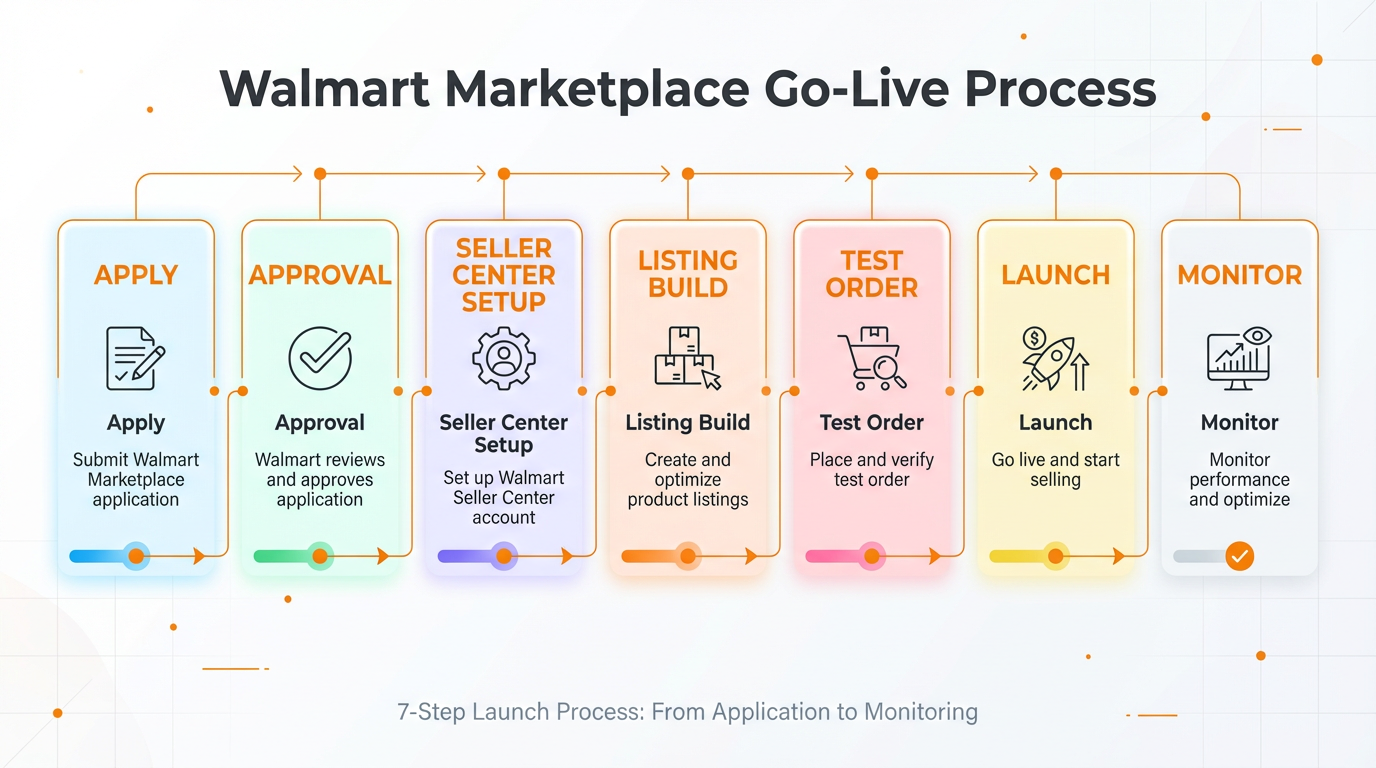
Step 1: Apply to Walmart Marketplace
- Start with the official application: marketplace-apply.walmart.com.
- Submit business information, tax or verification details (as applicable), and a clear overview of your catalog.
- Emphasize operational readiness: shipping speed, returns handling, and customer support.
Walmart seller account approval time: approval time varies by category and verification requirements. Plan for review and be ready to provide clarifying information quickly if requested.
Step 2: Set up your Seller Center account
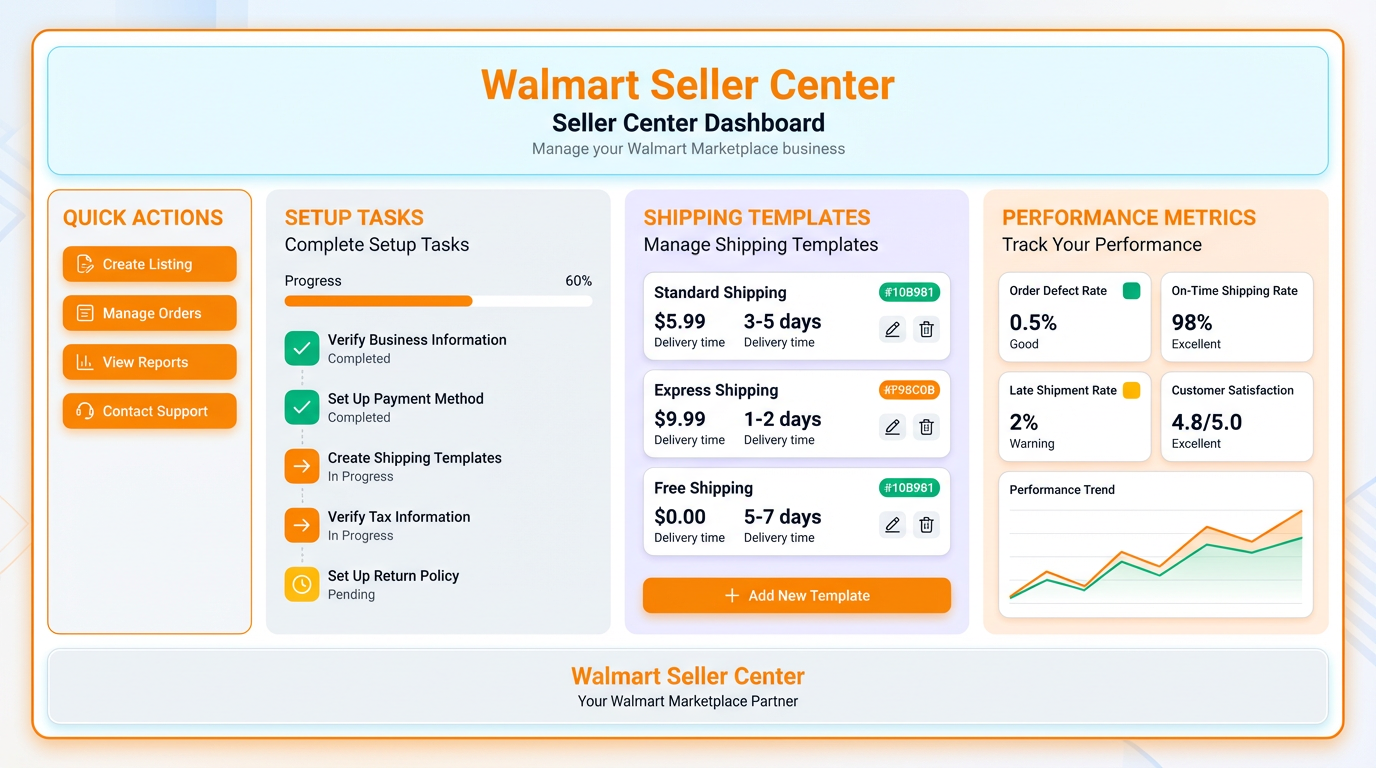
Once approved, complete your account registration and verification, then configure payment settings, shipping templates, return settings, and support workflows. Walmart provides official onboarding guidance that is worth reviewing: Getting started in Seller Center.
Step 3: Create and test your first listings
- Start with 3 to 10 proven SKUs from Amazon, ideally with stable demand and predictable margins.
- Build product pages that match Walmart content rules. Do not assume your Amazon formatting will carry over.
- Run a test order workflow internally to confirm shipping speed, tracking, and customer communication.
Step 4: Go live and monitor performance
Launch is the beginning, not the finish line. Review early signals daily for the first two weeks, then weekly once operations stabilize. Track listing health, conversion, pricing competitiveness, and fulfillment reliability. Walmart’s performance expectations matter, so make monitoring part of your routine.
- Treat setup as a system: shipping templates, returns, and support must be ready before scaling.
- Launch with a small, proven SKU set and validate operations first.
- Monitor performance metrics weekly and fix issues before they compound.
Listing and SEO: Amazon vs Walmart
Walmart listing rules and non-HTML descriptions
Walmart's product content is structured differently from Amazon's. One common mistake when moving from Amazon to Walmart is carrying over HTML formatting and Amazon-specific phrasing. Keep your Walmart content clean, scannable, and aligned with Walmart’s content guidance: Product content and imagery standards.
Amazon vs Walmart ranking signals.
Many Amazon sellers ask about Amazon and Walmart selling differences. The biggest shift is how heavily Walmart tends to emphasize offer quality signals such as price competitiveness and delivery experience. Use this comparison as a practical guide when you move your listing strategy over.
Checklist: a high-quality Walmart product page
- Clean title with product type, key attributes, and clear differentiation.
- Accurate identifiers and attributes so Walmart can classify the item correctly.
- Images that meet Walmart standards and reduce buyer uncertainty.
- Concise descriptions without HTML, focused on outcomes and specs.
- Competitive offer setup: price, shipping speed, and returns clarity.
- Do not copy Amazon HTML or Amazon-only language into Walmart pages.
- Treat shipping speed and price as ranking and conversion inputs.
- Build listing clarity first, then optimize with buyer language.
Fulfillment and Customer Service
Walmart Fulfillment Services (WFS) vs self-fulfillment
Walmart offers Walmart Fulfillment Services (WFS), a fulfillment option similar in concept to FBA. Your choice of WFS vs self-fulfillment affects delivery speed, operational workload, and your ability to compete for visibility. If you are evaluating Walmart Fulfillment Services (WFS) fees and onboarding requirements, use the official WFS resources: WFS overview and WFS fees.
Inventory planning for multichannel sellers
When you sell on both Amazon and Walmart Marketplace, inventory mistakes can multiply fast. Start with a dedicated allocation for Walmart so you do not starve your Amazon channel or oversell on Walmart. If you are launching WFS, plan inbound lead time and stock buffers so your delivery promises remain consistent.
Customer service standards and performance KPIs
Walmart emphasizes customer experience. Seller performance standards commonly focus on metrics like cancellation rate, on-time delivery, valid tracking, and seller response rate. Review the official standards and build a weekly dashboard habit: Seller performance standards.
- Choose WFS or self-fulfillment based on delivery reliability and margin math.
- Allocate inventory intentionally so you do not oversell across channels.
- Track seller performance KPIs weekly and resolve issues quickly.
Pricing, Buy Box, and Advertising
Pricing competitively
Walmart shoppers expect value. Your pricing strategy should be intentional: protect margin, but do not ignore how price affects conversion. If you sell the same product on Amazon and Walmart, consider how pricing parity and total delivered cost (including shipping) influence buyer perception on each platform.
How to win and protect the Walmart Buy Box
The Buy Box exists on Walmart, too, and it matters. Walmart Buy Box factors typically center on offer quality, including competitive price, shipping speed, fulfillment reliability, and seller performance. Use the official guide to understand the mechanics: The Buy Box.
- Audit price and shipping together, not separately.
- Fix operational causes behind cancellations and late deliveries.
Getting started with Sponsored Products and basic ad structure
Walmart advertising can accelerate early visibility, especially when you are launching a new catalog. Start simple: protect branded terms, test a small set of high-intent keywords, and isolate top SKUs so you can measure performance cleanly. For official ad onboarding resources, see: Walmart Connect Sponsored Search guide.
- Treat price as part of your offer quality, not just margin math.
- Protect the Buy Box by balancing price, shipping speed, and performance.
- Start ads simple, measure cleanly, then scale what works.
Using SellerSprite to Expand from Amazon to Walmart
Walmart is a different marketplace, but buyer language and competitive positioning still follow patterns. SellerSprite helps you reduce guesswork by turning Amazon demand signals into a disciplined launch plan for Walmart Marketplace.
A simple workflow: pick SKUs, validate demand, optimize keywords, monitor competition
- Choose SKUs that ship reliably and have low defect risk.
- Avoid products with heavy variation complexity in your first batch.
- Prioritize clarity and relevance over keyword stuffing.
- Keep a short list of high-intent phrases for Walmart page copy.
- Review pricing and delivery experience weekly.
- Expand only after the first batch is stable.
Start Your Walmart Launch With Cleaner Data
Get a FREE 3-Day trial and use SellerSprite Product Research, Keyword Research, and Competitor Research to pick your first Walmart SKUs and build clearer product pages.
- Use SellerSprite to choose SKUs with stable demand signals, not hunches.
- Translate buyer language into Walmart-friendly clarity.
- Monitor competition and expand only after stability.
FAQ and Next-Step Checklist
Can non-US sellers sell on Walmart Marketplace?
Some non-US sellers may be eligible through specific programs or regional pathways. Policies change, so start with Walmart’s official program pages and confirm current eligibility: Walmart Cross Border.
Do I need a US entity or a US warehouse?
Requirements depend on your region and program. Many sellers aiming at Walmart.com focus on US customer delivery expectations, so you should plan for reliable US shipping and returns workflows even if parts of your supply chain are overseas.
What is the Walmart seller account approval time?
There is no universal approval timeline. Approval time varies by category, verification needs, and marketplace load. The best way to reduce delays is to submit complete documentation and a clear catalog and operations plan.
Do I need WFS to succeed?
Not always. Many sellers succeed with self-fulfillment, but you must meet delivery promises consistently. If WFS improves delivery speed and reliability for your category, it can strengthen offer competitiveness and reduce operational burden.
What are the most common listing mistakes Amazon sellers make on Walmart?
- Using HTML or Amazon-style formatting that does not align with Walmart content rules.
- Writing titles that feel like keyword lists instead of clear product descriptions.
- Ignoring offer quality inputs like delivery promises and total price perception.
What should I track weekly after launch?
Track offer competitiveness, delivery reliability, seller performance metrics, listing health, and ad performance if you are running campaigns. Use Walmart’s dashboards to stay compliant and stable. For listing quality-related guidance, see: Listing Quality dashboard.
- Pick 5 to 10 Amazon-proven SKUs that ship reliably and have stable margins.
- Validate demand and buyer language in SellerSprite, then draft Walmart-friendly titles and attributes.
- Decide WFS vs self-fulfillment based on delivery reliability and margin math.
- Launch small, monitor seller performance KPIs weekly, and expand only after stability.
Share Your Sourcing Journey With SellerSprite Community
Join the SellerSprite community on the Facebook Group to share your sourcing journey, ask questions, and get support from fellow Amazon sellers.
View The SellerSprite Course Directory
Ready for the next step? Open the SellerSprite Academy course directory to continue building your Amazon FBA skills chapter by chapter.
About the author
References
- Walmart Marketplace application
- Walmart Seller Help: before you start selling on Marketplace
- Getting started in Seller Center
- Product content and imagery standards
- WFS overview
- WFS fees
- The Buy Box
- Seller performance standards
- Walmart Connect Sponsored Search guide
- Listing Quality dashboard
- Walmart Cross Border