TL;DR: Master Amazon product research with proven methods, tools, and strategies to find profitable, low-competition niches in 2026 and beyond, perfect for new and growing Amazon sellers.
Key Takeaways
- Effective Amazon product research combines data analysis, market validation, and competitive intelligence to identify high-potential products.
- Automated tools like SellerSprite streamline research, saving time and increasing accuracy compared to manual methods.
- Profitable niches often have steady demand, low competition, and room for brand differentiation.
- 2026 trends favor AI-powered tools, sustainability-focused products, and micro-niche targeting.
- New and established sellers can scale faster by using a mix of free and premium Amazon product research software.
Table of Contents
Note on marketplaces: This guide is specifically optimized for the US market.
What Is Amazon Product Research?
Amazon product research is the process of identifying, analyzing, and validating products that have strong sales potential, manageable competition, and sustainable profitability on Amazon. It's the foundation of any successful Amazon FBA (Fulfillment by Amazon) or private label business.
For new sellers, it helps avoid costly mistakes like launching products with no demand or oversaturated markets. For growing brands and marketing managers, it enables data-driven expansion into new niches and product lines.
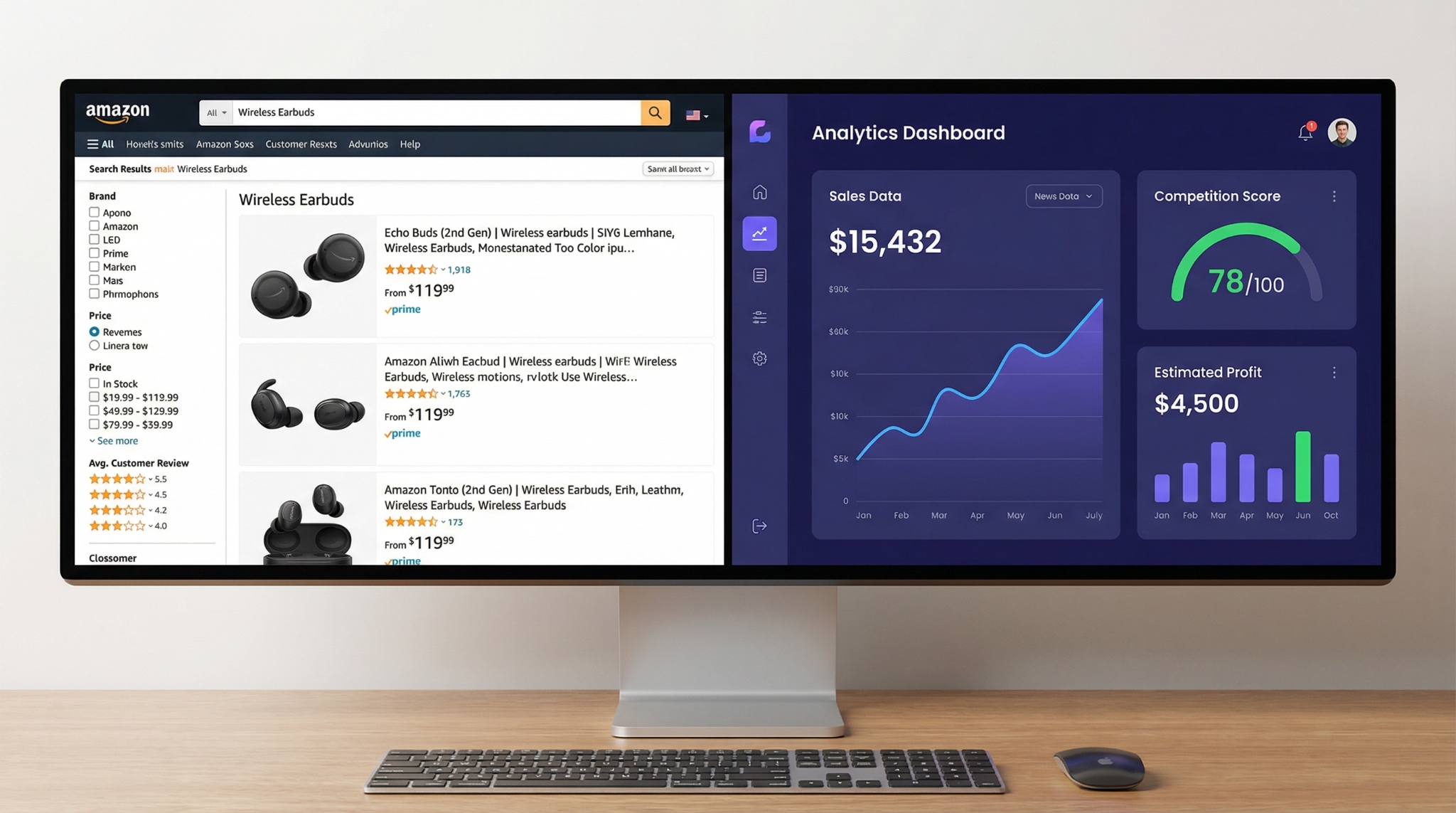
Product research goes beyond just looking at bestseller lists. It involves evaluating key metrics such as monthly sales volume, price points, review counts, seller competition, seasonality, and profit margins. The goal is to find that sweet spot: a product with consistent demand but not too many dominant players.
Why Product Research Matters in 2026
The Amazon marketplace is more competitive than ever. With over 2.3 million active sellers in the US alone, launching without proper research is like navigating a storm without a compass.
In 2026, success on Amazon will depend not just on having a good product, but on having the right product at the right time. Consumer behavior is shifting; sustainability, convenience, and personalization are rising in importance. Meanwhile, Amazon's algorithm favors products with strong conversion rates, fast delivery, and high customer satisfaction.
Product research helps you stay ahead by identifying emerging trends before they peak. For example, eco-friendly kitchen gadgets or smart home accessories for aging populations are niches gaining traction. By using data to validate these trends early, you can position your brand as a market leader rather than a follower.
Best Amazon Product Research Methods
1. Manual Research (Beginner-Friendly)
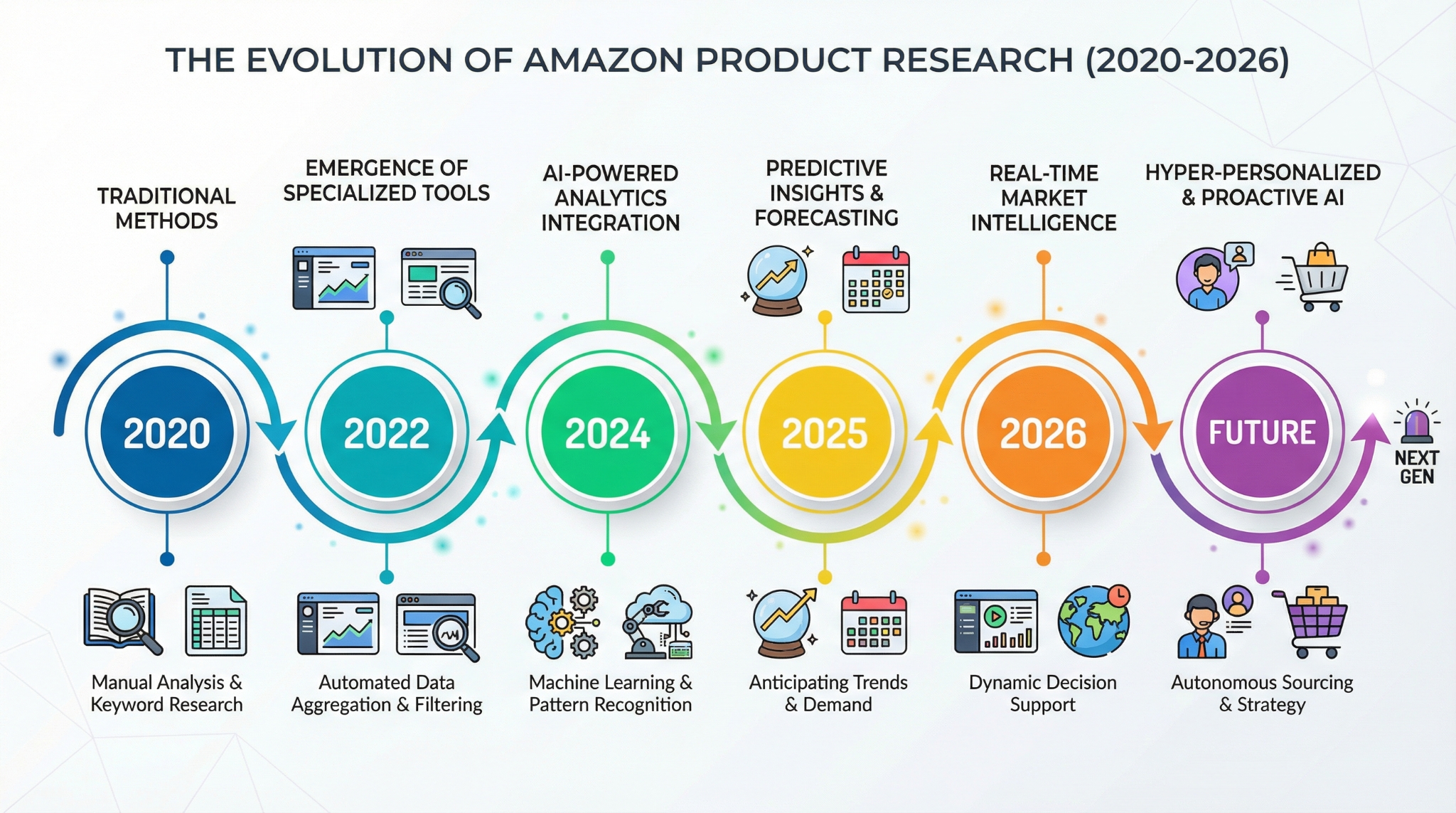
Manual research involves browsing Amazon categories, analyzing bestsellers, and using free tools like Amazon's search suggestions and review analysis. It's low-cost and educational, making it ideal for new sellers.
However, it's time-consuming and prone to bias. You might miss hidden competition or misjudge demand based on incomplete data.
2. Automated Research (Scalable & Accurate)
Automated tools like SellerSprite's Product Research Tool use AI to scan millions of listings and surface high-potential products based on customizable filters (e.g., price range, review count, sales velocity).
These tools provide instant access to key metrics like estimated monthly revenue, competition score, and profit margin. They also flag red flags such as hijacked listings or intellectual property risks.
3. Hybrid Approach (Recommended for Growth)
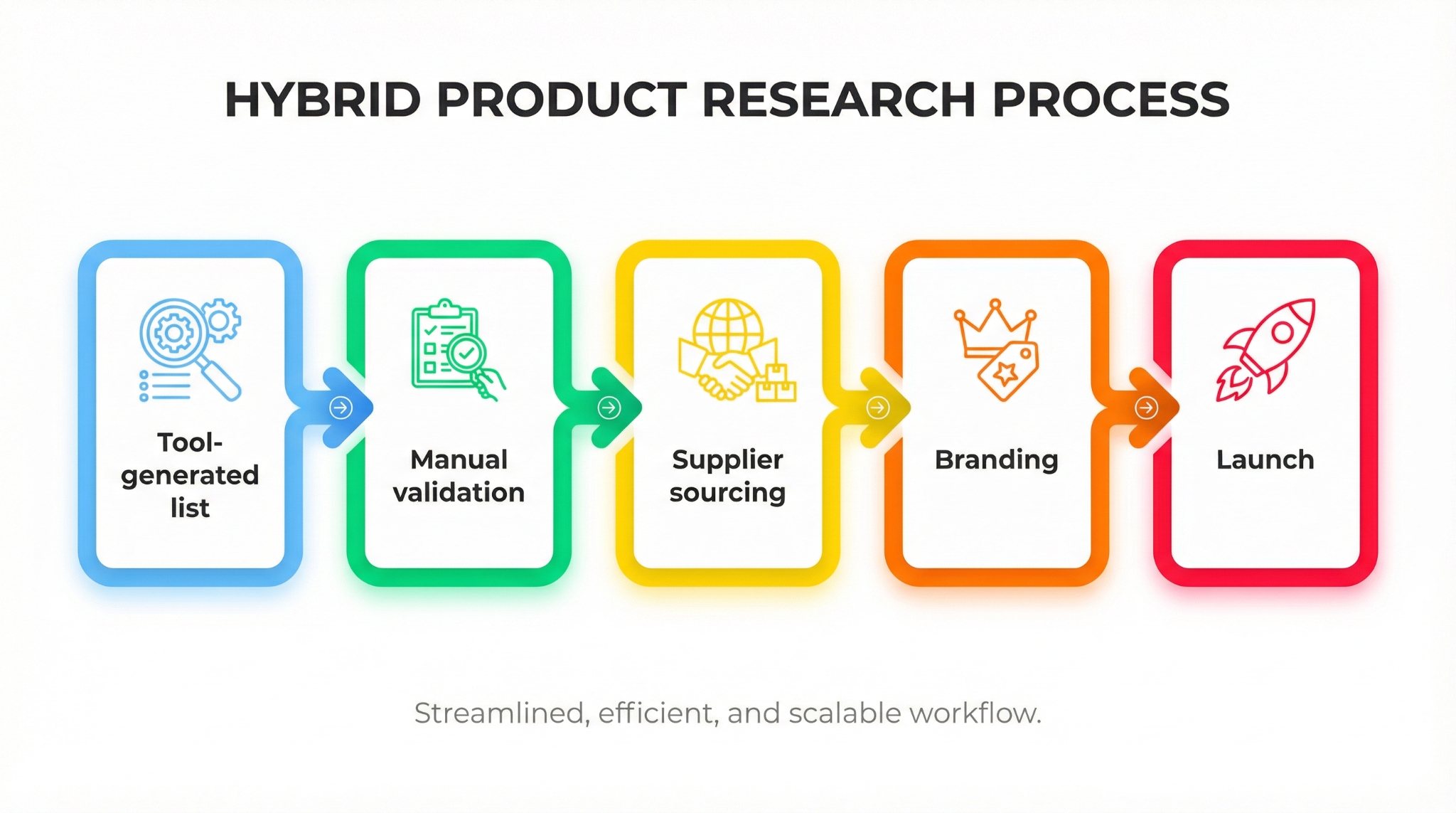
The most effective strategy combines automation with human insight. Use software to generate a shortlist of candidates, then manually validate them by reading reviews, checking supplier costs, and assessing branding opportunities.
For example, a tool might show a pet grooming glove with 300 units sold monthly and only 15 reviews. You then read customer complaints about shedding bristles; this becomes your product improvement angle.
Top Tools & Software for 2026
The best Amazon product research tools in 2026 combine speed, accuracy, and actionable insights. Here's a quick comparison:
- SellerSprite: AI-powered, real-time data, intuitive interface. Ideal for new and growing sellers. Offers free and premium plans.
- Jungle Scout: Industry veteran with robust features. Higher price point, better for established brands.
- Helium 10: Feature-rich but complex. Best for advanced users with technical know-how.
For most sellers, SellerSprite offers the best balance of power and simplicity. Its AI-driven "Opportunity Finder" scans the entire Amazon catalog and ranks products by search volume and trends, impressions, clicks, etc.
How to Find Low Competition Niches on Amazon
Finding low-competition niches is the holy grail of Amazon selling. These are categories where demand exists but isn't dominated by big brands or professional sellers.
Here's a proven 5-step method:
- Use a tool to filter by low review count (e.g., under 50 reviews). Fewer reviews often mean less competition.
- Look for steady sales volume (e.g., 200-500 units/month). Avoid products with spikes; these are often seasonal or viral.
- Analyze the top 3 competitors. Are they professional brands with polished listings? Or are they basic, text-heavy pages? The latter signals opportunity.
- Check for brand gaps. Are customers complaining about quality, missing features, or poor customer service? These are your entry points.
- Validate with external data. Use Google Trends or social media to confirm ongoing interest.
For example, a search for "reusable silicone food bags" might show several products with under 30 reviews but consistent 4-star ratings. Customer complaints about zipper durability? That's your chance to improve and brand it as "The Leak-Proof Silicone Bag."
Recommended Spoke Articles
Dive deeper into Amazon product research with these expert guides:
- Advanced Amazon Product Research Playbook - Master pro-level strategies for niche validation and product differentiation.
- The Best Free Amazon Product Research Tools in 2026 - Discover cost-effective tools to get started without breaking the bank.
- Discover High-Potential Amazon Products - Learn how to use data signals to spot winning products before they go mainstream.
Next Steps
- Start your product research journey with SellerSprite's free trial and explore real-time product data.
- Read the Advanced Amazon Product Research Playbook to refine your strategy.
FAQ
What are the best tools for Amazon product research in 2026?
The best tools in 2026 include SellerSprite, Jungle Scout, and Helium 10. SellerSprite stands out for its AI-powered insights, real-time data, and user-friendly interface, ideal for both beginners and experienced sellers. It offers accurate sales estimates, competition analysis, and trend forecasting, making it a top choice for efficient and scalable product research.
How do I find profitable products to sell on Amazon?
To find profitable products, use a combination of data analysis and market validation. Start by filtering for products with steady monthly sales (200-500 units), low competition (under 50 reviews), and healthy profit margins (at least 30%). Analyze customer reviews to identify pain points you can solve. Validate demand using tools like SellerSprite and external sources like Google Trends. Finally, check supplier costs on platforms like Alibaba to ensure profitability after Amazon fees.
What is the difference between manual and automated Amazon product research?
Manual research involves browsing Amazon, analyzing listings by hand, and using free tools like search suggestions. It's time-consuming but helps you learn the marketplace. Automated research uses software like SellerSprite to scan thousands of products instantly, providing data on sales, competition, and profitability. It's faster, more accurate, and scalable, especially for growing sellers.
How to Find Low Competition Niches on Amazon?
To find low-competition niches, use product research tools to filter by low review count (under 50), consistent sales volume, and minimal brand dominance. Look for customer complaints in reviews; these reveal unmet needs. Validate with external data sources and focus on micro-niches (e.g., "organic baby sunscreen for sensitive skin") where big brands haven't fully penetrated.
References
- Advanced Amazon Product Research Playbook View
- The Best Free Amazon Product Research Tools in 2026 View
- Discover High-Potential Amazon Products View
By SellerSprite Success Team
The SellerSprite Success Team is a group of Amazon FBA experts, data analysts, and e-commerce strategists with over 10 combined years of experience helping sellers scale profitable businesses on Amazon. We specialize in product research, competitive intelligence, and AI-driven market analysis, empowering new and established sellers with actionable insights and tools to win in 2026 and beyond.