TL;DR: Effective Amazon category analysis helps sellers identify high-opportunity niches, track performance trends, and make data-driven decisions using key metrics like demand, competition, and profitability, especially critical for US market success.
Key Takeaways
- Use Amazon category analysis to uncover profitable niches by evaluating demand, competition, and seasonality trends.
- Track weekly metrics like Best Seller Rank (BSR), review velocity, pricing trends, and new entrants to stay ahead of market shifts.
- Leverage AI-powered tools like SellerSprite's AI Category Insights to automate deep-dive research and benchmark performance.
- New and growing sellers should focus on niche categories with moderate competition and consistent demand to reduce risk and increase ROI.
- Integrate category tracking into your team's routine using templates like the Weekly Rank Tracking Report for better collaboration and agility.
Table of Contents
Note on marketplaces: This guide is specifically optimized for the US market.
Why Amazon Category Analysis Matters in 2026
As Amazon's US marketplace grows more competitive, with over 2.4 million active sellers and 350+ million products, choosing the right category is no longer a one-time decision. It's an ongoing strategic process. Amazon category analysis enables sellers to evaluate product niches based on real-time data, uncover hidden opportunities, and avoid oversaturated or declining markets.
For new sellers, this analysis reduces the risk of launching into a failing or hyper-competitive space. For growing brands and enterprise teams, it supports portfolio expansion and informs marketing spend. Whether you're conducting Amazon product category trends research or diving into niche category analysis, a structured weekly review keeps you agile in a fast-moving environment.
This guide walks through the essential metrics, tools, and strategies to conduct effective Amazon category research, helping you answer critical questions like: Which categories are rising? Where is competition thinning? And what signals indicate a profitable window of opportunity?
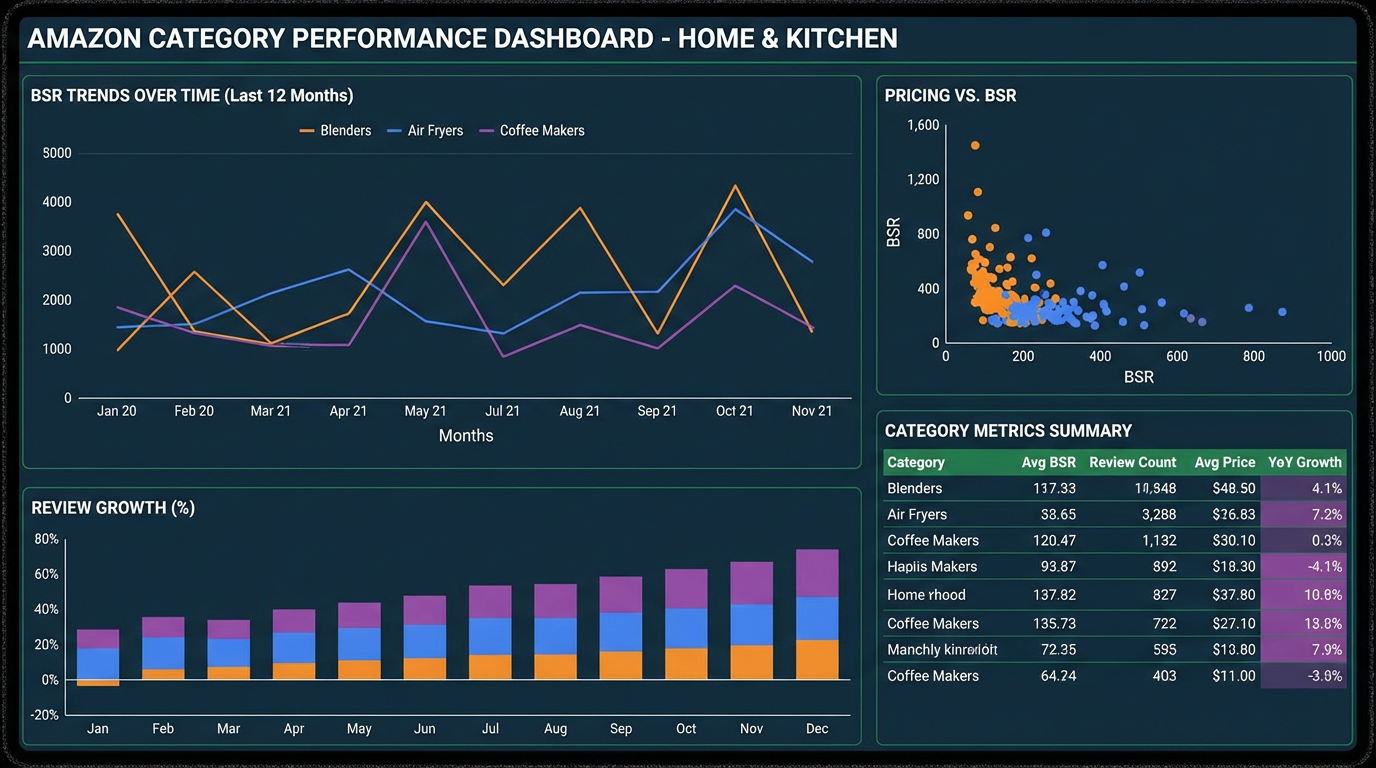
5 Essential Metrics for Weekly Amazon Category Analysis
To stay ahead, conduct a weekly audit of these five core metrics. They form the foundation of any robust Amazon category ranking and trend evaluation system.
1. Best Seller Rank (BSR) Trends
BSR reflects how well a product sells within its category. While not a direct sales figure, consistent BSR improvement across top listings indicates strong demand. Track average BSR, volatility, and outlier performers weekly. A sudden drop in BSR across multiple products may signal increased competition or algorithm changes.
2. Review Velocity & Rating Distribution
High ratings alone don't tell the full story. Analyze how quickly top sellers gain reviews. A product gaining 50+ 5-star reviews in 30 days suggests aggressive launch tactics or external traffic. Also, check for clusters of low-rated products, which could indicate customer dissatisfaction and an opening for a better solution.
3. Pricing & Discount Patterns
Frequent discounts, lightning deals, or price wars are red flags for high competition. Use historical pricing data to identify whether prices are trending downward (margin erosion) or stable (healthy category). Tools that show 90-day price history help spot predatory pricing or seasonal dips.
4. New Product Entry Rate
A surge in new listings within a category often precedes market saturation. Track how many new ASINs appear weekly. If more than 10-15% of top 100 listings are under 90 days old, the category may be overcrowded. Conversely, low entry rates can signal barriers to entry or untapped potential.
5. Seasonality & Search Volume Trends
Some categories spike during holidays or back-to-school seasons. Use keyword search volume data to map demand cycles. For example, "camping gear" peaks in spring, while "electric blankets" rise in winter. Aligning launches with seasonal trends boosts visibility and conversion.
Best Tools for Amazon Category Research & Trend Tracking
Manual analysis is time-consuming and error-prone. The right tools automate data collection, visualization, and alerts, giving you an edge in identifying the best Amazon categories to sell in.
SellerSprite AI Category Insights
SellerSprite's AI-powered category analysis tool delivers instant reports on demand, competition, and profitability scores. It benchmarks your niche against thousands of others and highlights emerging trends using machine learning. Features include:
- Automated weekly category health reports
- Competitor entry rate tracking
- Review velocity comparison
- Profitability estimation based on FBA fees and pricing
Helium 10 & Jungle Scout
These popular tools offer robust Amazon product category trends dashboards. However, they often require manual setup and lack real-time AI insights. Best used for initial discovery, but less effective for ongoing monitoring.
Keepa & CamelCamelCamel
Ideal for tracking price and BSR history. Browser extensions provide visual graphs, but lack predictive analytics or category-level summaries. Great for spot checks, not strategic planning.
For teams serious about Amazon niche category analysis, integrating a platform like SellerSprite into your workflow ensures consistency, accuracy, and speed.
How to Build a Winning Category Strategy (Step-by-Step)
Follow this actionable checklist to turn Amazon category analysis into a repeatable process that drives growth.
Step 1: Define Your Criteria for a Profitable Category
Before diving in, set thresholds. For example:
- Minimum monthly demand: 10,000+ searches
- Top product price range: $25-$75
- BSR of top 10: Under 10,000
- New ASINs per week: Fewer than 5
- Average rating of top sellers: Below 4.3 (opportunity for better quality)
Step 2: Run a Competitive Landscape Report
Use SellerSprite's Category Insights Guide to generate a full category snapshot. Look for:
- Market concentration (few dominant players = easier to disrupt)
- Review gaps (low-rated top sellers = opportunity)
- Pricing stability (avoid categories with constant discounting)
Step 3: Monitor Weekly with a Standardized Template
Download and customize the free Weekly Rank Tracking Report Template to standardize your team's analysis. Assign roles: one person tracks BSR, another monitors pricing, etc.
Step 4: Validate with Small-Scale Testing
Before committing to inventory, run a low-cost test via Amazon Launchpad, influencer seeding, or PPC campaigns. Measure conversion rates and organic traction to validate demand assumptions.
Step 5: Scale or Pivot Based on Data
After 4-6 weeks, evaluate performance. If BSR improves and ACOS stays below 30%, consider scaling. If not, pivot to a new category using insights from your analysis. This agile approach minimizes losses and maximizes learning.
FAQ
What are the most profitable Amazon categories for US sellers in 2026?
As of 2026, the most profitable Amazon categories include home fitness equipment, eco-friendly kitchenware, pet tech (like GPS trackers), and smart home accessories. These niches combine strong demand, moderate competition, and room for innovation. Always validate with real-time data using tools like SellerSprite to confirm trends before entering.
How do I analyze Amazon category performance for my product niche?
To analyze category performance, track five key metrics weekly: Best Seller Rank (BSR) trends, review velocity, pricing patterns, new product entry rate, and seasonality. Use AI-powered tools like SellerSprite to automate data collection and generate actionable insights. Combine this with competitive benchmarking and small-scale testing to validate opportunities.
What tools can I use for Amazon category analysis to improve sales?
Top tools for Amazon category analysis include SellerSprite (for AI-driven insights and weekly tracking), Helium 10 and Jungle Scout (for initial research), and Keepa (for price and BSR history). SellerSprite stands out by offering automated reports, competitor monitoring, and integration with team workflows, making it ideal for both new and enterprise sellers.
Next Steps
- Start your free trial with SellerSprite to access AI-powered category insights and weekly tracking tools.
- Explore our Amazon Seller Analytics Guide, your complete hub for data-driven selling strategies.
- Download the Weekly Rank Tracking Report Template to standardize your team's category analysis process.
References
- Amazon Seller Central Guidelines View
- SellerSprite Help Center: Category Insights Guide View
- How to Use AI Category Insights View
- Weekly Rank Tracking Report Template for Teams View
By SellerSprite Team
The SellerSprite Team combines decades of Amazon marketplace experience with cutting-edge AI analytics. We specialize in helping new and growing sellers make data-driven decisions through actionable insights, real-time tracking, and scalable research methodologies. Our content is rooted in real-world testing, industry trends, and direct feedback from thousands of e-commerce professionals across the US and global markets.