Web-based software suite to start & grow your Amazon business
Analyze marketplace data while browsing Amazon
A SaaS platform for global voice of customer and product research
IPアドレスとブラウザの特徴から、日本でご利用されていると判断をし、「セラースプライト-日本語版」をご利用ください。
Launching a product on Amazon FBA requires careful due diligence to avoid pitfalls. In this chapter, we will cover how to verify that your product is allowed on Amazon (not restricted or prohibited), how to check for patent and trademark issues, and how to improve your product by mining competitor reviews using SellerSprite. Following these steps will help protect your Amazon business from compliance problems and give you an edge in product development.
Ensure your product is compliant, free from patent issues, and optimized for success by leveraging SellerSprite's tools. Start strong, avoid costly mistakes.
Start Your Product Check →
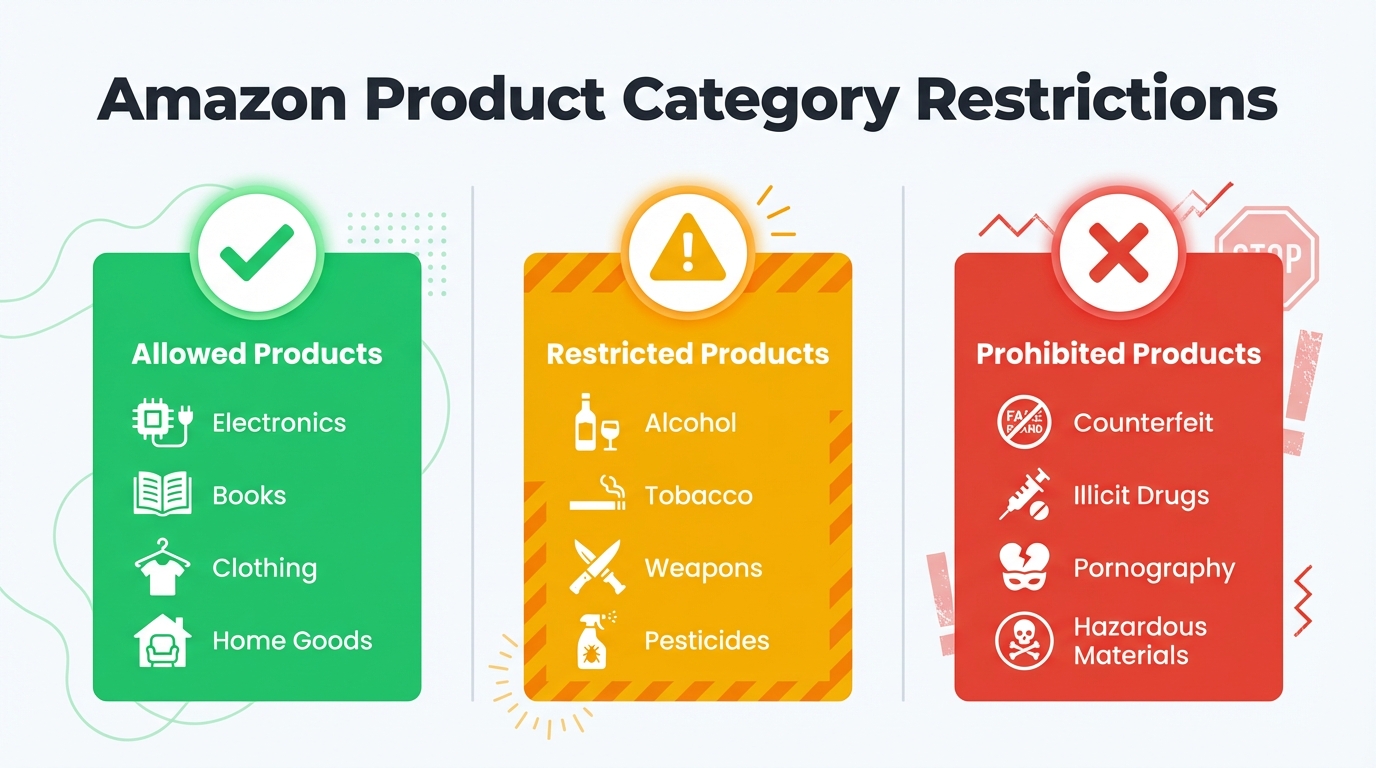
Before you invest in a product, always confirm that Amazon permits it for sale. Amazon classifies products into open, restricted, or prohibited categories:
To illustrate the difference:
Why check restrictions? Listing a restricted product without approval can lead Amazon to remove your listing, or worse, suspend your account. You must check product status before ordering inventory.
Amazon provides lists of restricted product categories and prohibited items on Seller Central. Review these lists to see if your product or its category is mentioned. Keep in mind the lists are not exhaustive and are updated frequently as policies change. If your product falls into categories like Alcohol, Tobacco, Adult products, certain Electronics, etc., it may require approval or be disallowed.
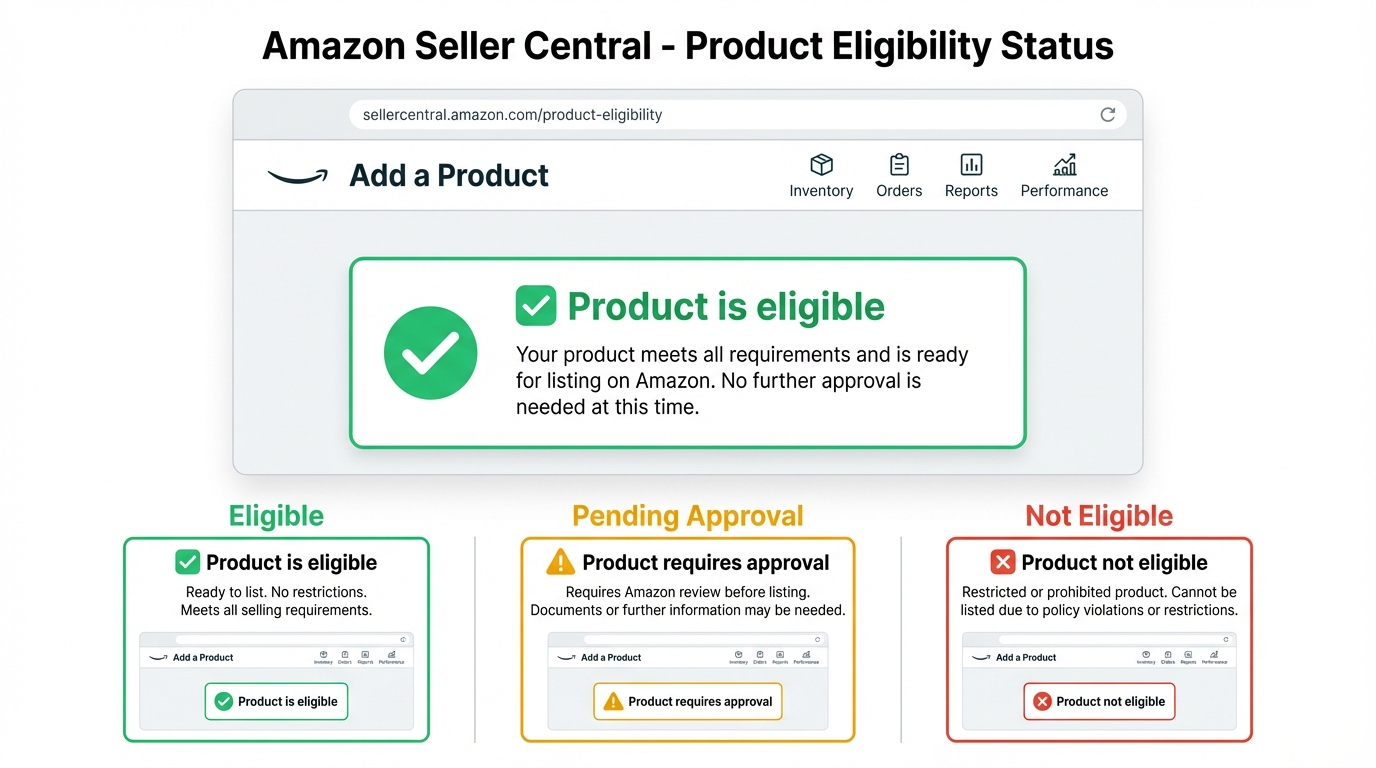
A quick way to verify restrictions is to attempt adding the product to your Seller Central account. Search for the product's ASIN or name under Catalog > Add a Product. If you see a button labeled "Apply to Sell" instead of "Sell Yours," that indicates the product is in a gated category or brand. An "Apply to Sell" prompt means you must request approval, whereas a "Sell Yours" button suggests the item is open (though still be cautious, approval might be needed for certain sub-categories or brands even if the button shows up).
Even within an open category, specific sub-categories can have their own restrictions. For example, selling topical medical devices might require approval even if the "Healthcare" category is open. Always read Amazon's category guidelines for your product type. Amazon's Category Approval help pages detail which categories (e.g., Fine Jewelry, Automotive, Toys for certain ages, etc.) require ungating. Verify whether your product's category or use case requires any special approval.
Amazon also restricts certain brands. This means even if the category is ungated, a brand owner may have protected their brand on Amazon (often through Amazon Brand Registry) so that only authorized sellers can list those products. If your product is from a well-known brand or has trademarks (e.g., Disney, Nike), check if that brand is gated. When adding such a product, Amazon will notify you if brand approval is needed. If you plan to sell a branded product (wholesale or arbitrage model), ensure you are authorized; otherwise, consider choosing another brand or a generic version.
Some restrictions are not immediately obvious from Amazon's public lists. For instance:
Tip: A useful habit is to use the Amazon Seller mobile app or Seller Central to scan the product's barcode/ASIN before sourcing. The system will tell you if the item is "Requires Approval" or "Restricted" for your account. This real-time check can save you from buying unsellable stock.
Tip: Document your checks. Keep a log (with date) of the Amazon policy pages you consulted or screenshots of the "Sell Yours" or "Apply to Sell" indicator. Amazon's policies can change, and having proof that you checked can be useful if a product's status changes later.
Finally, if you discover that your product falls into a restricted category but is not outright prohibited, you can apply for approval (ungating). Approval usually involves providing documents like invoices from authorized suppliers, certificates (e.g., safety certificates for toys), or other evidence of compliance. If you're set on selling in a gated category, research the exact requirements and be prepared to meet them. Otherwise, it may be wiser to choose a different product to avoid delays and complications.
Important: Never attempt to sell a prohibited item. If Amazon catches a prohibited product listing, it will be removed, and your account could face immediate penalties. Even for restricted products, do not try to slip through without approval. Amazon actively monitors and will shut down such listings, potentially suspending your seller account for repeated violations. It's not worth the risk to your business.
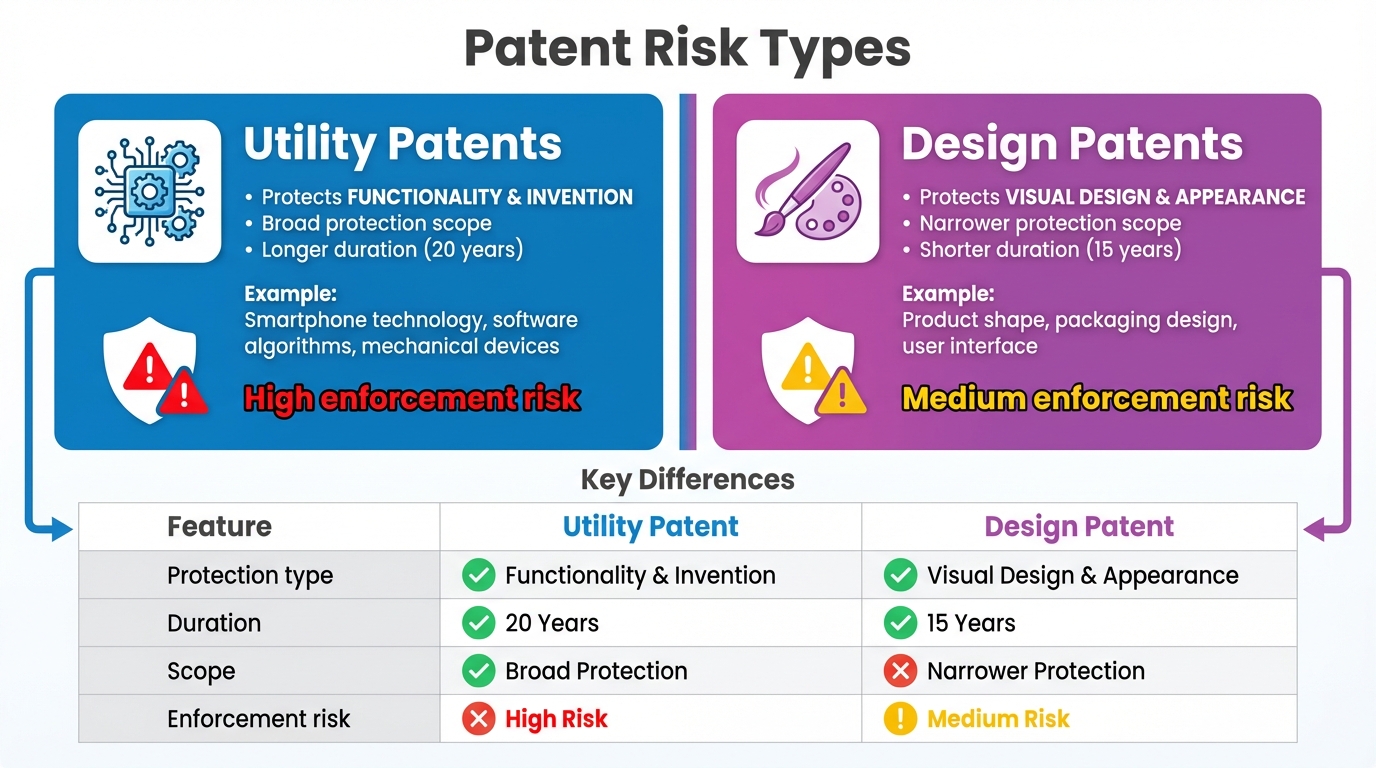
When you develop or source a product, you must ensure you are not violating someone else's patent. Patents grant inventors exclusive rights to their inventions or designs for a period, and selling a product that infringes an active patent can lead to legal action or an Amazon takedown. There are two main types of patents to be aware of:
Why patents matter: If you inadvertently sell a patented product, the patent owner can file an infringement claim. This can result in Amazon pulling your listing, destruction of your inventory, legal cease-and-desist letters, or expensive lawsuits. Big brands and inventors do monitor Amazon for knockoffs of their patented designs. Thus, checking for existing patents is a critical step before finalizing your product idea. SellerSprite provides a Design Patent verification tool exactly for Amazon sellers to check if they would infringe on certain design patent when designing their products, and you may leverage it if you need.
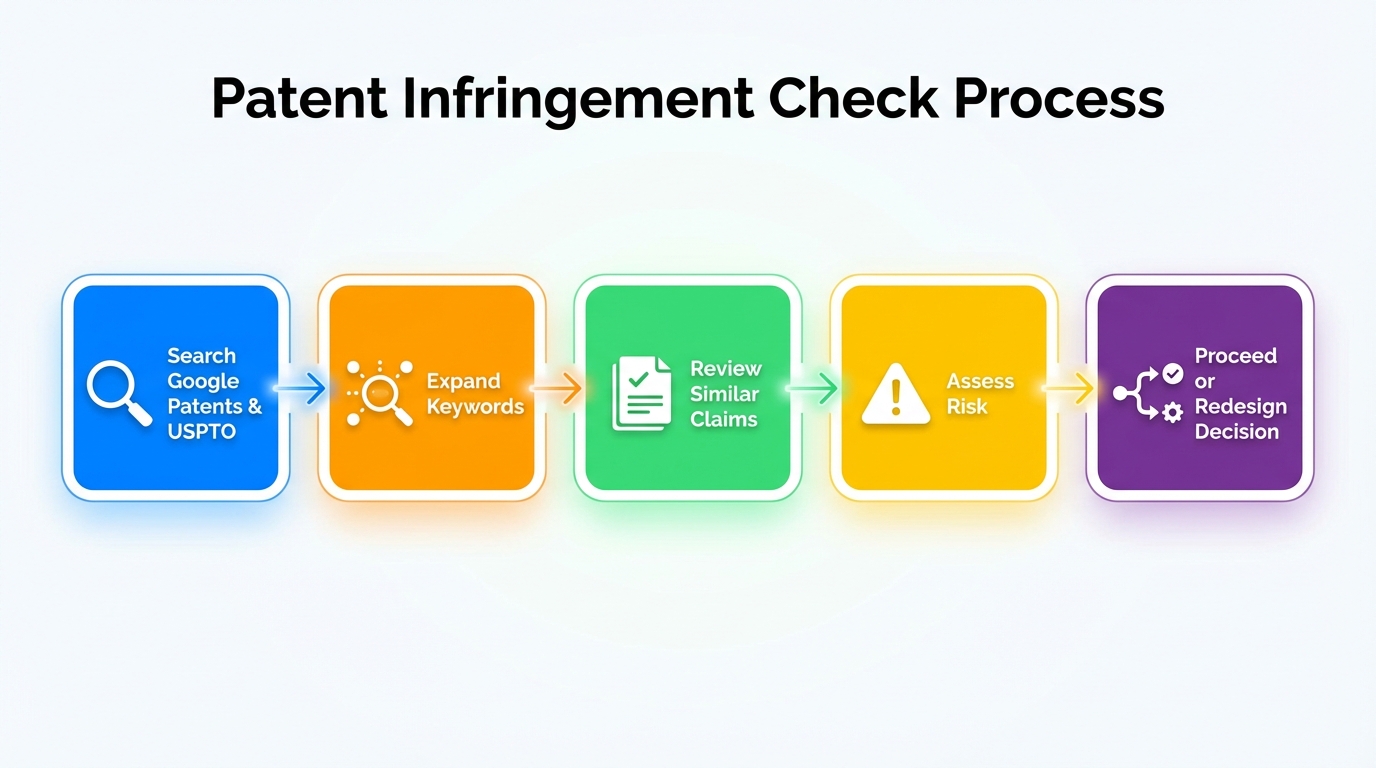
A great starting point is Google Patents, a free search engine for patents worldwide. It has a user-friendly interface and allows keyword searches for millions of patents. Start by entering broad keywords related to your product's concept or features (not the brand name). For example, if you invented a new kind of footrest for toilets, search terms like "toilet footrest patent" or just "toilet footrest" to see what comes up. Google Patents will show you existing patents and published applications that match those terms. Skim the results for any product that looks similar to yours.
For thoroughness, search the United States Patent and Trademark Office (USPTO) patent database as well. The USPTO's Patent Public Search (formerly a patent search interface like TESS) is the official source for all U.S. patents and applications. It may be less user-friendly than Google Patents, but it's comprehensive and authoritative. If Google Patents didn't reveal anything obvious, use the USPTO search to double-check. You can search by keywords or by patent numbers if you find some on Google that you want full details on. The USPTO database is also useful if you want to narrow results by classification or date. (Note: Many foreign patents will also appear on Google Patents. If you plan to sell internationally, consider checking patents in those specific markets as well.)
When searching, think of different ways to describe your product. Patented inventions might not use the same marketing terms you do. Use broader terms for the category or function. For example, instead of searching "ergonomic snow shovel with LED light patent," search "snow shovel patent" and "shovel with light patent" separately. The idea is to catch patents that cover the core idea, even if details differ. Also, try synonyms or related concepts. If your product is a type of organizer, search "storage organizer patent" or "adjustable shelf patent," etc. Spending time on multiple searches increases the chances you spot relevant patents.
If a competitor product exists, check whether that company lists any patent numbers on its packaging, manual, or website. Often, companies proudly display their patent numbers or mark products as "Patent pending" in product listings. For example, the Squatty Potty (toilet footrest) company mentions its design patent on its site. A quick visit to a known brand's website or even a glance at product images can reveal patent info. If you find a patent number, you can look it up on Google Patents or USPTO to read its claims and scope.
If your searches find patents that seem close to your product, read the abstract and drawings to see if the product is essentially the same. Focus on the claims section of utility patents; that's the legal definition of what's protected. It can be technical; if you're not confident, professional help is wise. For design patents, compare the images to your product design; if they look very similar, that's a red flag. You may need to modify your design to avoid infringement or choose a different product if there's a broad patent blocking your idea.
Patent law can be complex. If you have any doubt, it's worth consulting an intellectual property (IP) attorney to do a professional patent search and opinion. They can confirm if your product might infringe on an existing patent or give you peace of mind that you're in the clear. Yes, it's an extra cost, but far cheaper than a lawsuit. Even hiring a freelancer or specialist for a patent search can help if an attorney is out of budget.
Summary of patent search: Start with Google Patents (easy to use) and then cross-check on USPTO for thoroughness. Use broad keywords to cast a wide net. Check competitors for any patent claims. When in doubt, get professional advice. Only proceed with your product once you're confident it doesn't violate others' patent rights. If you discover a patent conflict, you might need to redesign your product or pick a different opportunity.
In addition to patents, you must ensure your brand name, logo, or slogan isn't infringing someone else's trademark. A trademark is essentially the legal term for a brand identifier. It can be a word, phrase, symbol, design, or even a sound or smell that distinguishes a business's goods. For Amazon private label sellers, trademarks most often concern the brand name you put on your product and packaging, or any unique product name you coin.
If you launch your product under a name that's already trademarked by someone in a related category, you could quickly get into trouble. The trademark owner can file a complaint with Amazon or send a legal notice demanding that you stop using the name. Amazon might remove or suppress your listing for trademark infringement, resulting in lost sales and requiring a rebrand. Rebranding after you've launched is costly and can waste all the marketing effort you put into the original name. It's crucial to choose a brand/name that is free and clear from the start.
Here are the steps to conduct a trademark clearance search for your potential brand or product name:
Come up with a few different name ideas for your brand or product line. Be creative and try to coin something unique. The more unique the name, the easier it will be to trademark and the less likely it is to conflict with an existing brand. Avoid obvious generic names or famous brand names (e.g., don't name your electronics brand "Sonyy", which is too close to Sony, for example).
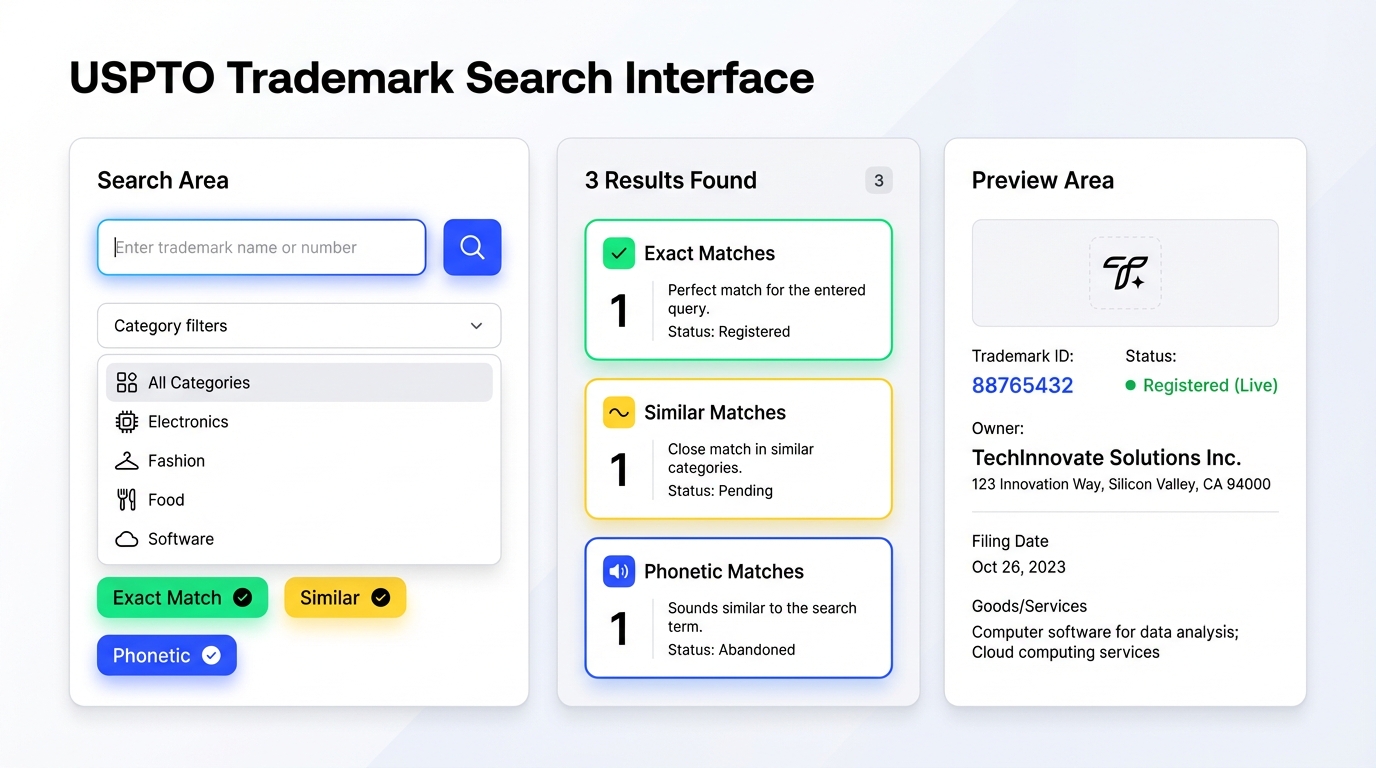
The primary resource for U.S. trademarks is the USPTO's Trademark Electronic Search System (TESS). This is an online database of all federal trademark applications and registrations. You can access it for free on the USPTO website. Start with a Basic Word Mark Search for your exact name and similar names. For each name idea, search not only the exact spelling but also variations (for example, if your brand idea is "StairMaster Gear," also search "Stair Master" or "StairMaster" alone). The goal is to see if anyone in a similar product category has a trademark that's identical or confusingly similar. Pay attention to the Class of goods/services in the results. If you find a similar name but it's registered in an unrelated class (e.g., your name matches a registered trademark for a software company, and you're selling kitchen utensils), there might not be a conflict. However, anything in the same or related class as your product category is a potential issue.
Not all businesses register their trademarks federally, especially smaller brands. Do a Google search on your proposed name. See if any company or product (even if not on Amazon) is already using it. If you find a business using the name in a similar industry, even without a ® or ™, you might want to avoid that name to prevent future disputes. Also, search on Amazon itself by typing the name in the search bar and see if products or brands pop up. If your exact name or a very close one is already in use on Amazon for similar products, pick a different name to avoid customer confusion (and potential trademark complaints).
It can help to check domain name availability and social media handles for your brand name. This is not a legal requirement, but if the .com domain of your brand is taken by another business, that's a sign the name might be in use. Websites like Namechk can search many platforms at once. While not all uses will be trademarks, a heavily used name is less ideal for building a unique brand presence.
If you plan to expand into other countries' marketplaces (Europe, etc.), also check those trademark databases (like the EUIPO for Europe) or at least ensure your name doesn't accidentally mean something bad in another language.
After gathering the above information, evaluate which name is the cleanest, which has no identical or confusing trademarks in your category, and no heavy usage by others. Ideally, your brand name should be distinctive. Once chosen, you can move forward with confidence that you won't immediately infringe someone's rights.
While not required to start selling, registering your trademark is highly recommended as you grow. It gives you legal protection and access to Amazon's Brand Registry (which unlocks marketing benefits on Amazon). You can file a trademark yourself or through an attorney. However, note that you do not need an active trademark on day one to sell on Amazon; you just need to ensure you're not infringing on others at the start. You can file for your trademark once you're committed to the brand and know the name is clear.
Just as with patents, if you're not confident in conducting the search or interpreting the results, you can hire a trademark attorney or a professional search firm to conduct a "clearance search" for you. They may catch confusingly similar marks you might overlook (for example, phonetic similarities or foreign language equivalents). This can save you from future headaches.
Key points to remember: A trademark can cover names, logos, and slogans, anything that identifies the source of a product. Two companies can have the same name in different industries, but on Amazon, you typically operate in the realm of physical goods, so conflicts with any consumer product brand are important to avoid. If you skip this step and accidentally use a trademarked name, you risk a scenario where, after you launch, you receive a notice that you're infringing and you must pull all your products and rebrand. That can be devastating for a new seller in terms of cost and lost time. It's far better to spend a few hours upfront doing a thorough trademark search and picking a unique brand name.
Once you've ensured your product is compliant and your brand is safe, the next step is to make your product as successful as possible in the marketplace. One of the best ways to do this is by leveraging customer reviews, not just on your own products (if you have any yet), but on your competitors' products. Review mining means analyzing reviews of similar products to gather insights into what customers like, dislike, and wish were better. This data is a goldmine for improving your product design, quality, and marketing. In this section, we'll focus on how to effectively mine reviews using SellerSprite, an Amazon seller tool that offers a Review Analysis feature.
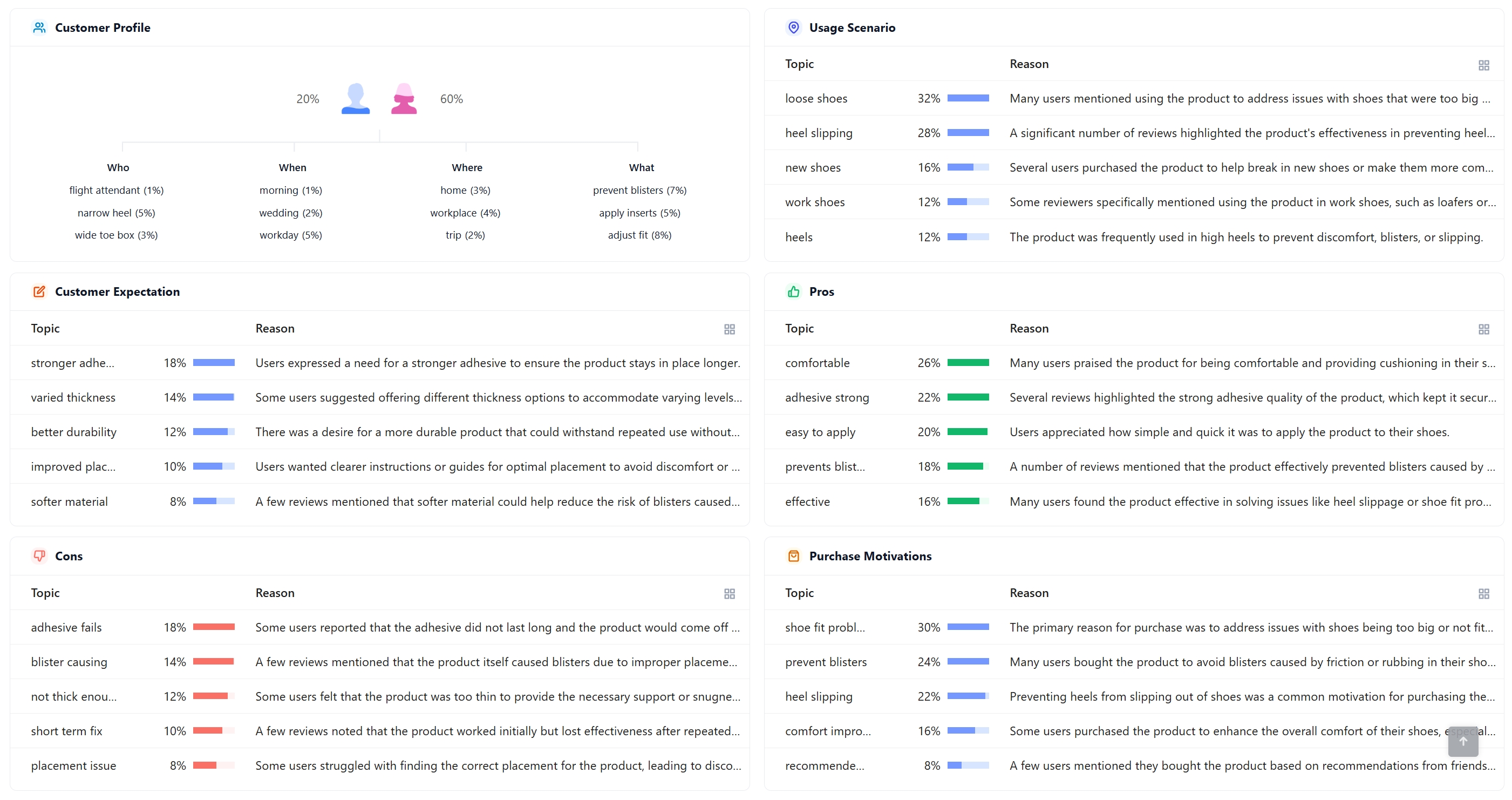
Imagine learning from every mistake and every win of your competitors' products without having to experience them yourself. That's what review mining offers. By scanning through reviews (especially the detailed feedback in 1~3-star and 4~5-star reviews), you can spot patterns and recurring themes. SellerSprite's Review Analysis tool helps automate and organize this process:
In short, review mining reveals what your target customers care about. What they love, what frustrates them, and what they wish they had. You can then use those insights to make a superior product and craft a compelling listing.
Follow these steps to systematically mine reviews and turn them into actionable improvement ideas:
In SellerSprite, use the Review Analysis tool (available via their web platform or Chrome extension) to load the ASINs of your top competitor products. Focus on products that are selling well in your niche; they will have many reviews to learn from. Also include products similar to what you plan to sell (in terms of features, price range, etc.). SellerSprite allows you to compare multiple ASINs' reviews side by side, which can be helpful.
Once SellerSprite has pulled in the review data, take advantage of its filters. You can filter by star rating (e.g., look at all 1- and 2-star reviews to see common complaints, then 4- and 5-star reviews to see what people love). You can also filter by date to see if issues are ongoing or are just early problems. SellerSprite's tool can automatically highlight frequently mentioned keywords or issues. For example, it might show that "handle" is a frequently used word in 1-star reviews of a competitor's vacuum cleaner, indicating that many people had issues with the handle.
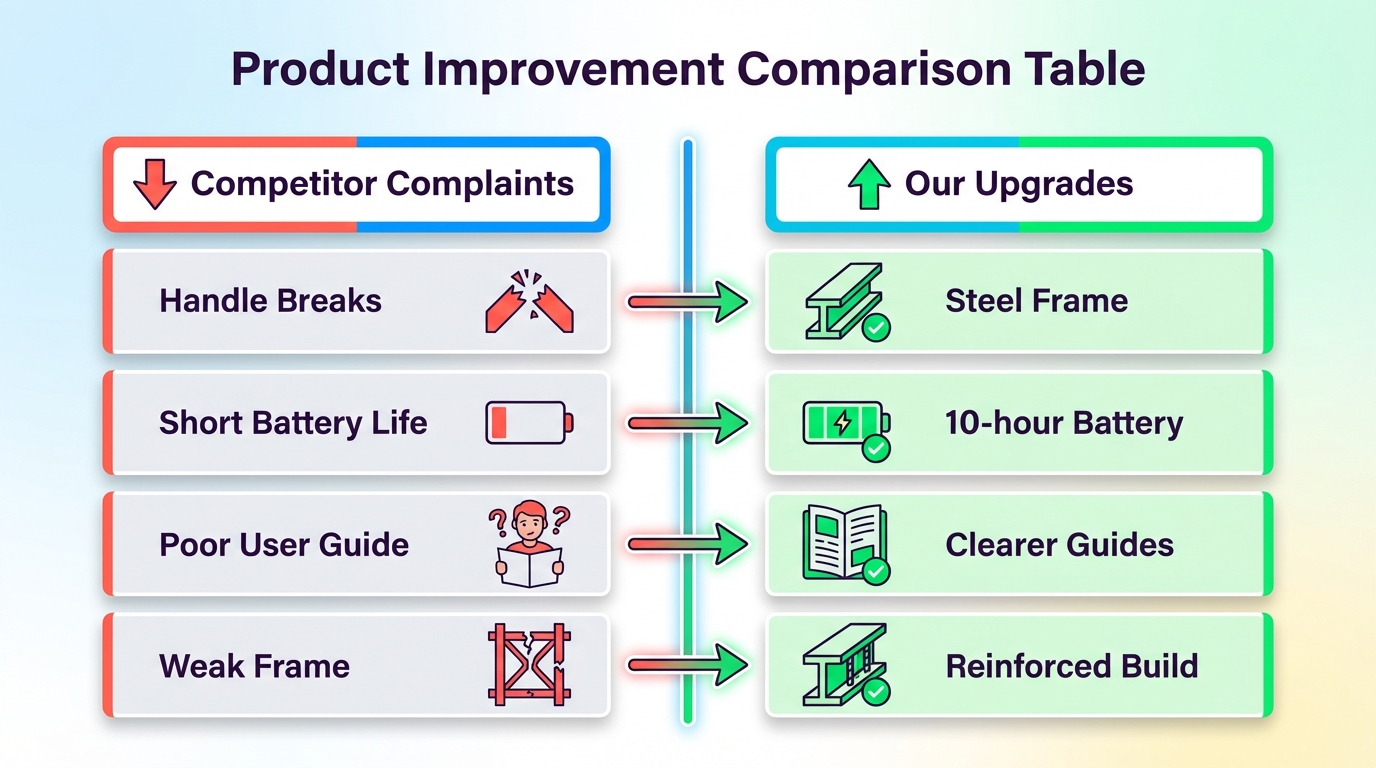
Read through the negative reviews and note the problems that appear repeatedly. These are the pain points you could fix in your own product. For instance, you might discover a pattern like: "The handles need to be stronger," indicating that dozens of customers complain that the handles of a competitor's product broke or are too flimsy. That's a clear signal that the handle's durability is a weakness. Another example: "Very convenient, but the battery dies quickly", indicating the product's battery life is insufficient for many users. List out these recurring complaints, spot the top issues, and confirm those complaints are not one-off flukes but true systemic problems.
Equally important, look at the positive reviews (4★ and 5★) to see what features or benefits customers rave about. These are the things you must not lose in your product and should likely emphasize. For example, customers might repeatedly say, "This ladder is great for stairs, super stable on uneven steps!" or "I love how lightweight it is; I can carry it anywhere." These tell you the aspects of the product that are truly valued. If "great for stairs" comes up often, you should ensure your version of the product maintains that stair-friendly design. If "lightweight" is a selling point, make sure your product isn't significantly heavier, or, if it is, that you have a trade-off that justifies it. SellerSprite can extract common positive phrases, so you can systematically see what customers like most.
Now, take those findings and create two lists for your product development:
Communicate the needed improvements to your supplier or manufacturer. For instance, "Our research shows competitor handles break. We need a thicker gauge steel for the handle and better attachment screws." Work out these changes in the sampling stage. If certain features need to be added (maybe customers all wish the product had an extra accessory or adjustable setting), see if you can incorporate that. Essentially, you are tailoring your product specs based on real user feedback from similar products.
Use the review insights not only in product development but also in how you present your product:
The process doesn't end after product development. Once you start selling and gather your own customer reviews, use SellerSprite to analyze them as well. This will help you catch new issues early and continually improve your product, listing/customer service over time. It's an ongoing feedback loop: feedback -> improve -> feedback -> improve, which is key to long-term success on Amazon.
By using SellerSprite to systematically analyze reviews, you remove much of the guesswork from product development and marketing. You're basing decisions on actual data, which is the voice of the customer. This can give you a significant competitive advantage. You'll be able to say, "Our product solved X problem that others had", which can be a compelling pitch in your marketing and result in higher customer satisfaction.
SellerSprite's Review Analysis essentially serves as an Amazon review checker, helping you uncover these insights quickly. It lets you see what customers love or hate about competing products, so you can strategically position your product better. Many successful Amazon sellers credit review mining as a crucial step in creating products that generate positive reviews from day one. After all, you're delivering what customers already told the market they want.
In this chapter, we covered critical pre-launch steps for Amazon FBA success:
By diligently performing these checks and research tasks, you are de-risking your Amazon venture. You avoid products that could get you suspended or sued, and you increase the odds of launching a product that earns positive reviews and outshines the competition. This upfront work might seem time-consuming, but it's an investment in building a sustainable and profitable FBA business. Always remember: an hour spent on research can save you months of trouble down the line.
Proceed to the next chapter, where we will delve into sourcing strategies, now that you have a vetted product idea with strong improvement angles. Happy selling and may your product be compliant, differentiated, and loved by customers!
Spot restrictions early, avoid IP risks, and turn competitor reviews into your product's next big upgrade with SellerSprite. Your best launch starts with better research.
Try SellerSprite Now →
Visit the Course Directory to view all available chapters of the SellerSprite Amazon Seller Beginner to Master Course and jump to the section you need.
Open Course Directory →
Content is loading. Please wait
There are no comments at this moment.
You are trying too often, please try again later!
Deleted comments cannot be recovered.