





本篇目录
如何使用卖家精灵插件筛查关键词相关性?
2026/03/27 阅读数 (7,309) 评论数 (2)
关键词词库,是每个亚马逊精品卖家贯穿从产品上架到广告投放每个环节的核心资源,它不仅决定你的产品如何被看见,更影响着目标客户的精准触达。
所以一个精准的关键词词库的重要性也就不言而喻。
以前我们判断一个关键词的相关性,是根据每个关键词下自然流量排名前10的产品外观,批量确定关键词是否与我们的产品相关,虽然不用去亚马逊前台挨个搜索关键词,并手动统计与自己产品相似的竞品数量,但这个方法还是有点费眼睛的。
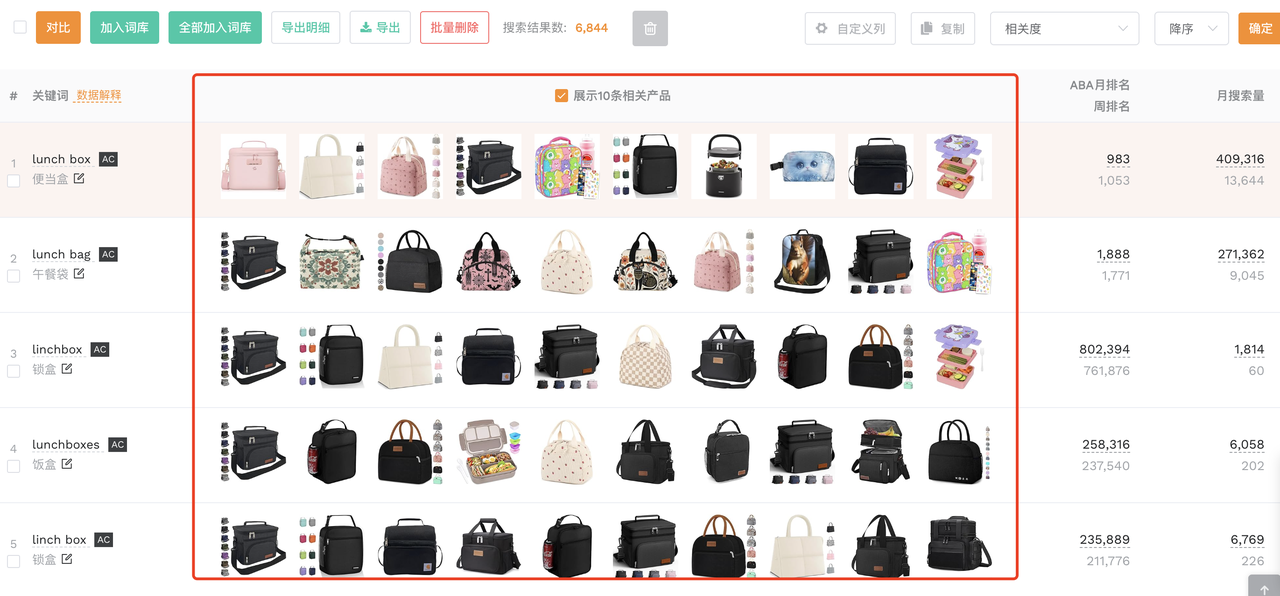
卖家精灵插件现在上线的【筛查相关性】功能,则是通过计算关键词下竞品ASIN在自然位中的占位率大小来判断关键词相关性的高低,也就是说,我们用算法替代了人工统计每个关键词下竞品数量的步骤,其实底层原理还是一样的。
产品经理视频讲解:
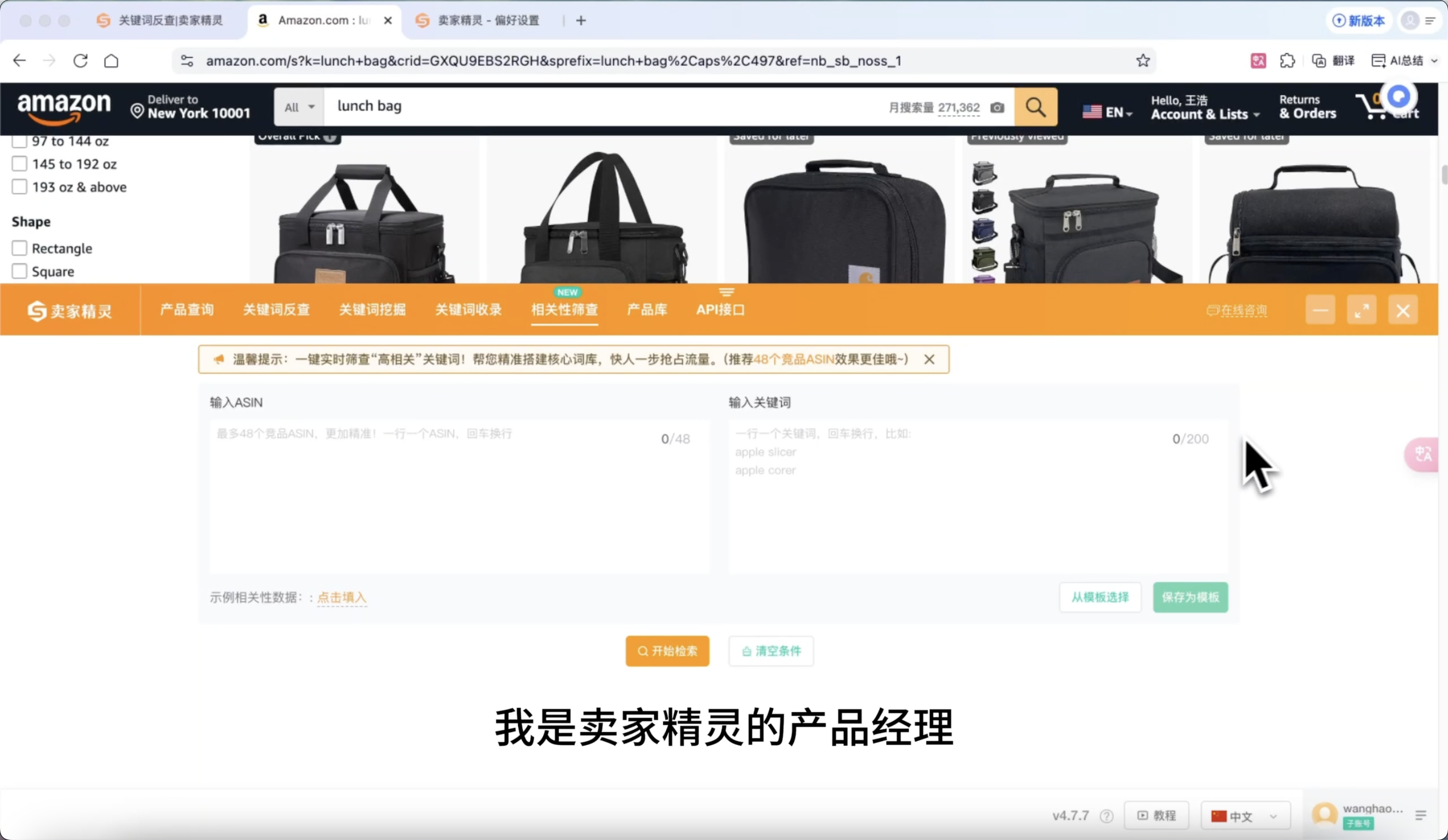
Video Player is loading.
功能原理
当你提供的竞品ASIN与你的产品高度相似(可互相替代)时,占位率基本可以认为完全等同于关键词的相关性,占位率越大,则相关性越高。
占位率=y/x(竞品数量/搜索结果自然位数量),表示在关键词搜索结果的自然位前x名的产品里,有y个产品是你提供的竞品
数据范围:实时爬取关键词下搜索结果前96个自然位的排名(根据每页展示数量自动调整页数:每页展示48个产品的,爬取前2页;每页展示16个产品的,爬取前6页)
通俗一点来说,就是看这些竞品在某个关键词下能占搜索结果前96个自然位中的多少位置,占得越多说明这个词和你的产品越相关。
举个简单例子:
假设你是一个做午餐包的卖家,搜索“lunch box”这个核心关键词后:
- 自然位前4的产品里有4个都是你的竞品,则占位率=4/4=100%
- 自然位前16的产品里有10个是你的竞品,则占位率=10/16=62.5%
- 自然位前48的产品里有35个是你的竞品,则占位率=35/48=72.9%
另外,因为每个关键词在不同自然位区间下都会有不同的占位率,所以我们在实际计算时会通过加权计算多个自然位的占位率最后得出一个综合占位率来判断关键词的相关性,其中靠前的自然位占位率被赋予更高权重。综合占位率越高,表明关键词的相关性越强。
相较于之前的方法,【筛选相关性】功能是通过实时爬取关键词排名来判断当前搜索结果下竞品的数量,因为关键词排名本身就是动态变化的,这样更能贴合用户的真实判断场景,并且支持自定义输入任意需要判断相关性的关键词,不仅限于工具的自有词库。
该功能免费提供给卖家精灵注册用户使用,一次最多支持输入48个竞品ASIN以及400个关键词
好用不好用,试试就知道!点我下载插件
一、建立精准竞品库
因为这个功能是通过关键词下自然位中竞品的占位率大小来判断关键词的相关性,所以要尽可能地保证竞品库的精准性,确保提供的竞品与你的产品高度相似。
如果你的产品还未上架到亚马逊,以下2种方式可以快速定位你的竞品:
1.1 关键词搜索结果采集:在亚马逊前台输入你准备做的产品的核心关键词,使用卖家精灵插件【产品库】功能采集搜索结果前3页的产品数据
1.2 BSR榜单交叉分析:进入你准备做的产品的主要类目BSR榜单,使用卖家精灵插件【产品库】功能采集Top100的产品数据
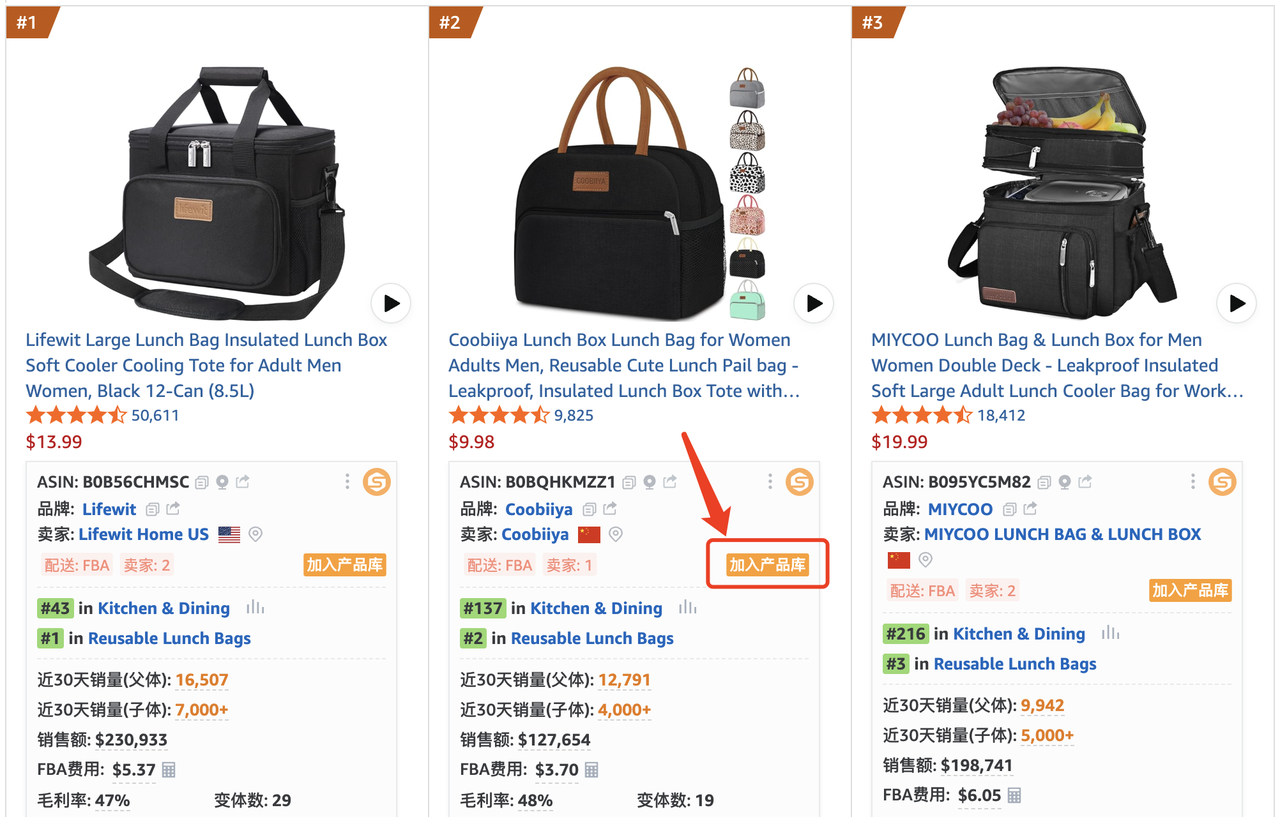
如果你的产品已经在亚马逊上架售卖,那么除了以上2种方式,你还可以:
1.3 关联商品深度挖掘:使用卖家精灵【关联流量】功能,查找产品在哪些Listing中有过曝光
1.4 广告数据反推:在广告报表中筛选跑出的竞品ASIN
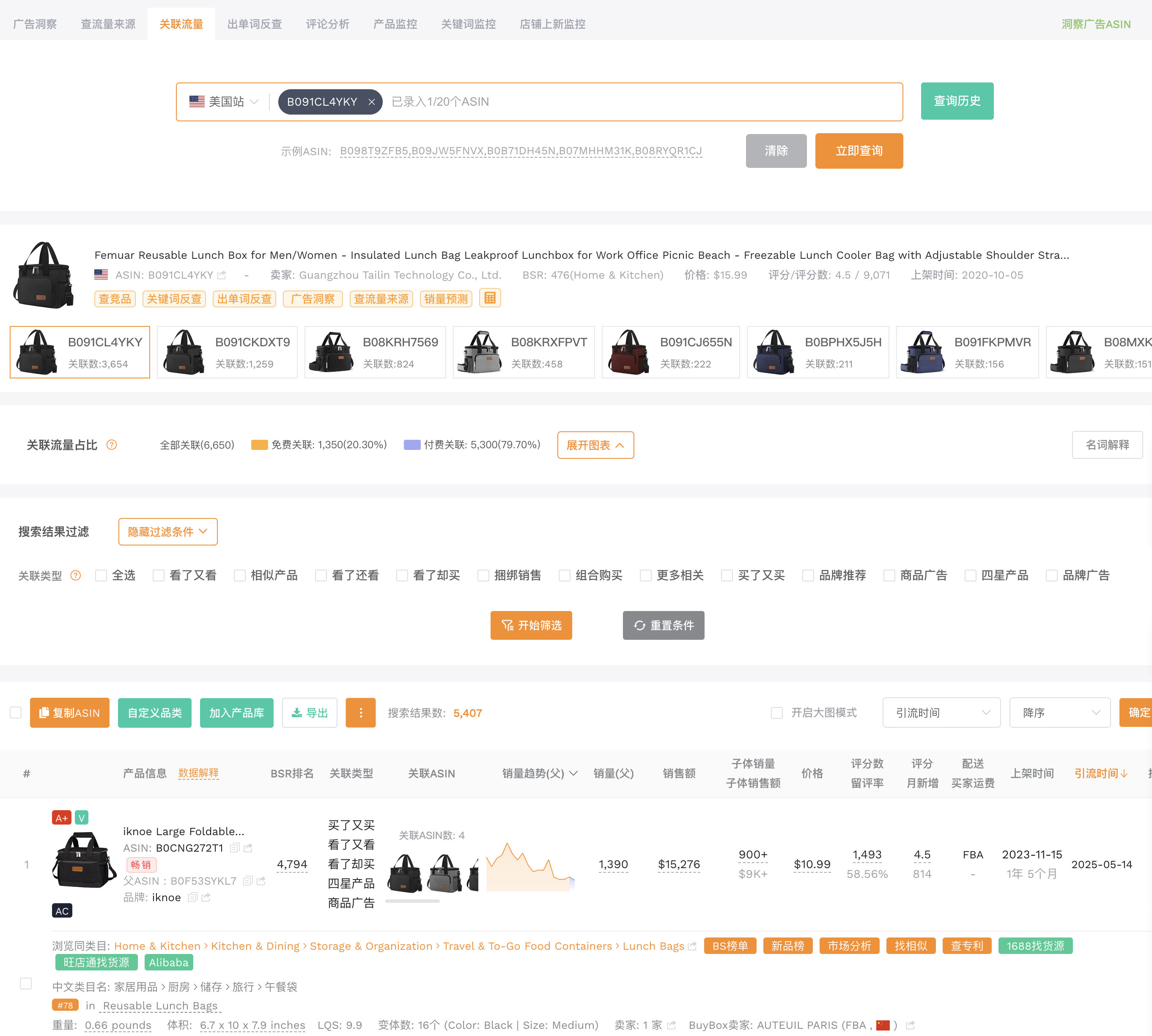
当搜集到50-100个候选竞品时,按照以下5种维度筛选出真的竞品
a、类目节点匹配度:类目节点是否完全一致
b、外观相似度对比:形状、颜色、材质等是否类似
c、功能参数对比:能满足的功能需求是否一致,比如充电宝的续航时间
d、相似的价格区间:合理竞品价=我方定价×(1±15%),比如我方卖$29.99,竞品价格范围应控制在25.49-$34.48
e、高度的可替代性:是否能完全替代我方的产品,用户购买了这个产品就不会再买我方产品
为了让竞品库在进行相关性筛查时发挥最大作用,这里分享几个准备竞品库的小窍门:
1、竞品数量不宜太少:数量太少,会因所选竞品当前竞争力而产生较大误差。比如关键词A与我们高度相关,但所选竞品销量较低,自然排名靠后,但不能说明不相关
2、竞品数量不宜太多:数据太多会导致爬取速度过慢,且说明竞品库没有经过筛选,过于粗糙,意义不大
3、建议输入的对标竞品是48个左右,因为这是大部分亚马逊PC端搜索结果页一页的自然位数量
4、竞品结构要多样:务必要同时覆盖高相似和高销量的两类产品
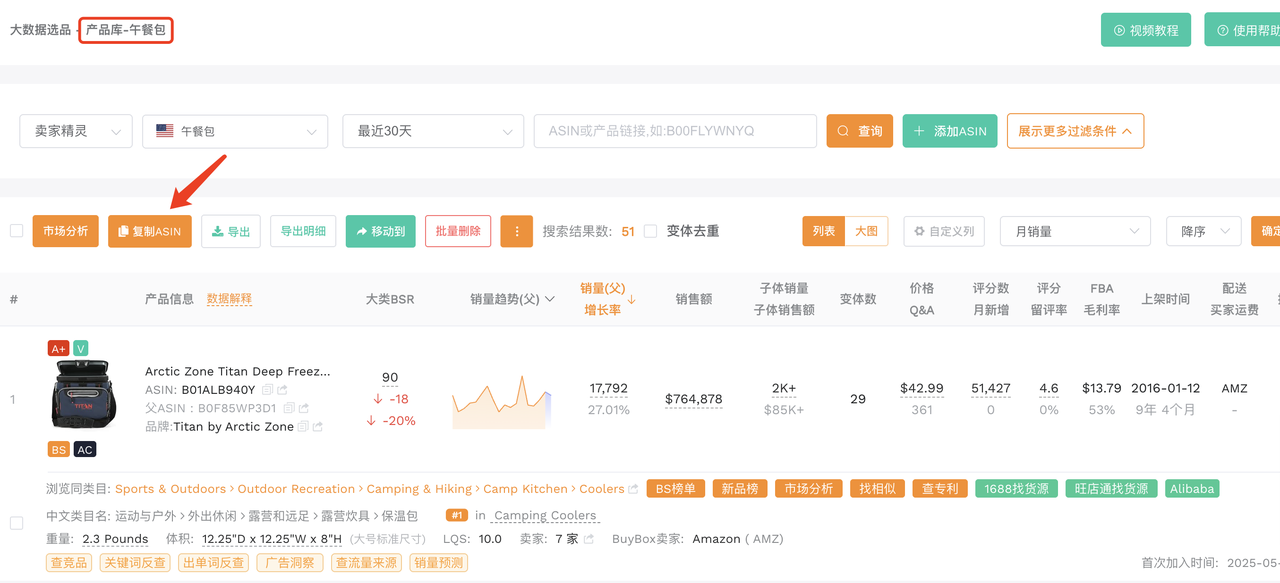
根据以上步骤,我们最终筛选出了一个有49个精准竞品的产品库:
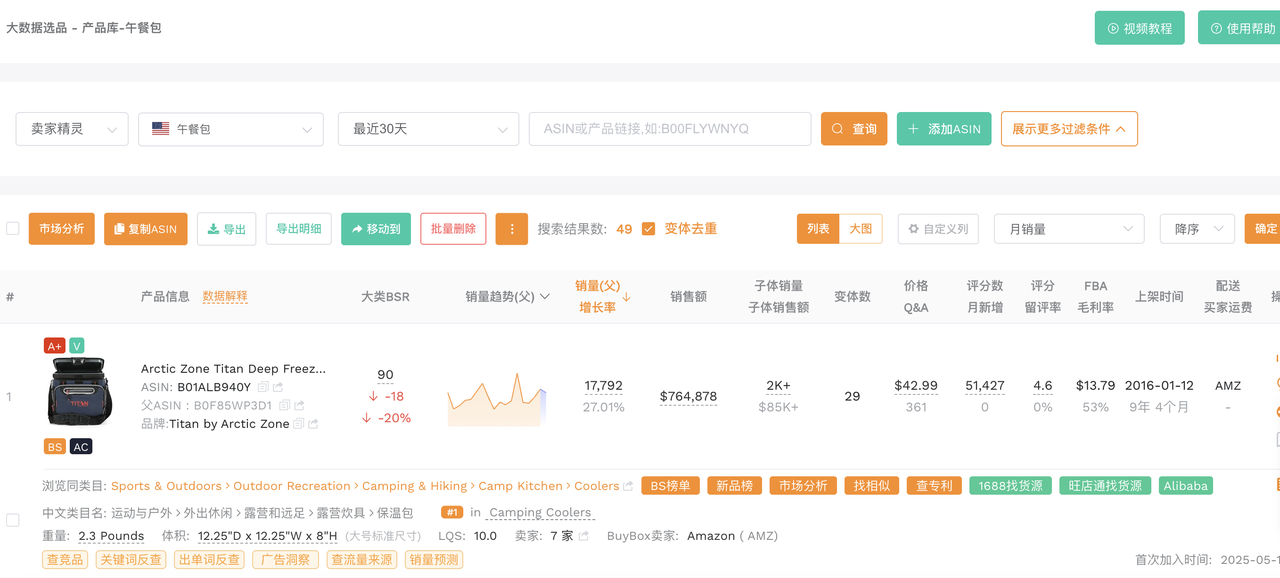
二、搭建关键词词库
尽可能充分地搜集关键词:卖家精灵提供了4种拓词方式,建议结合起来使用,保证关键词词库的完整性。
通过竞品拓词又分为2种方式,一种是【关键词反查】,适用于反查单个ASIN在最近30天内进入过亚马逊前台搜索结果前3页的所有搜索流量词,也就是有哪些关键词给这个产品带来了曝光;
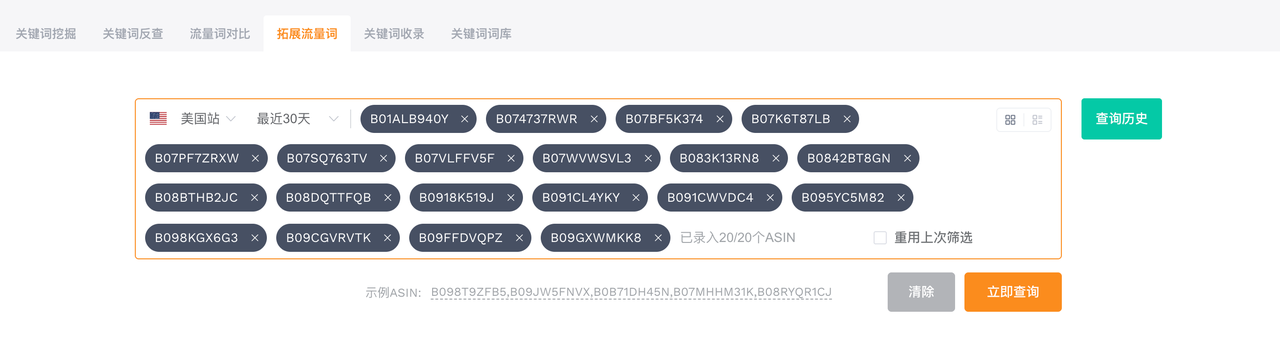
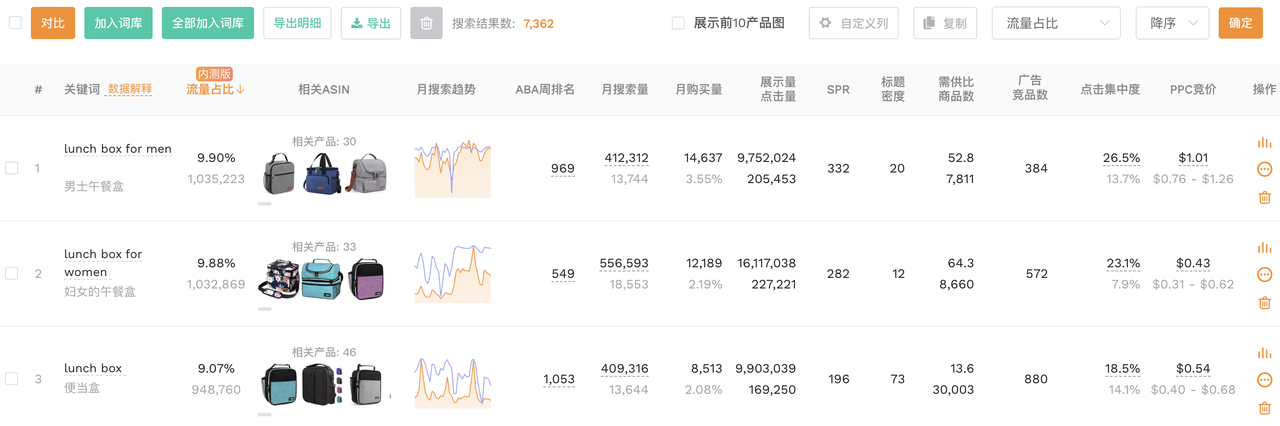
另外一种是【拓展流量词】,在关键词反查的基础上可以支持批量查询多个ASIN的流量词(一次最多可查询20个子ASIN),查询结果合并去重后展示。
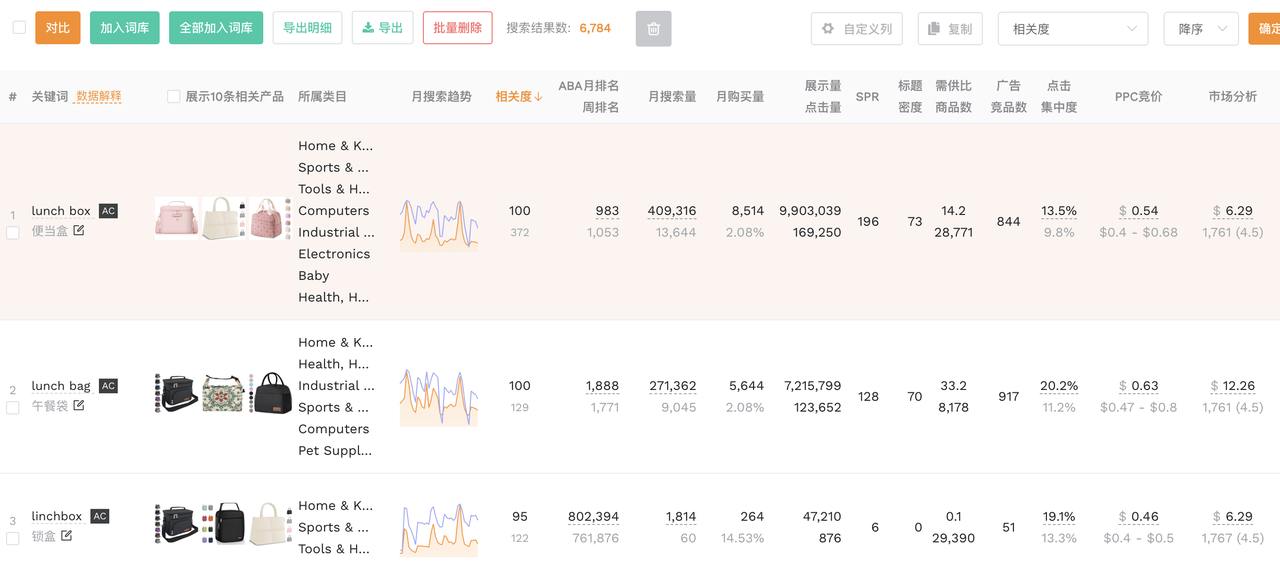
以词拓词(【关键词挖掘】功能),是通过产品的核心主词拓展相关关键词。先定位查询的关键词下的产品,再挖掘与这些产品相关联的关键词、拓展长尾词。

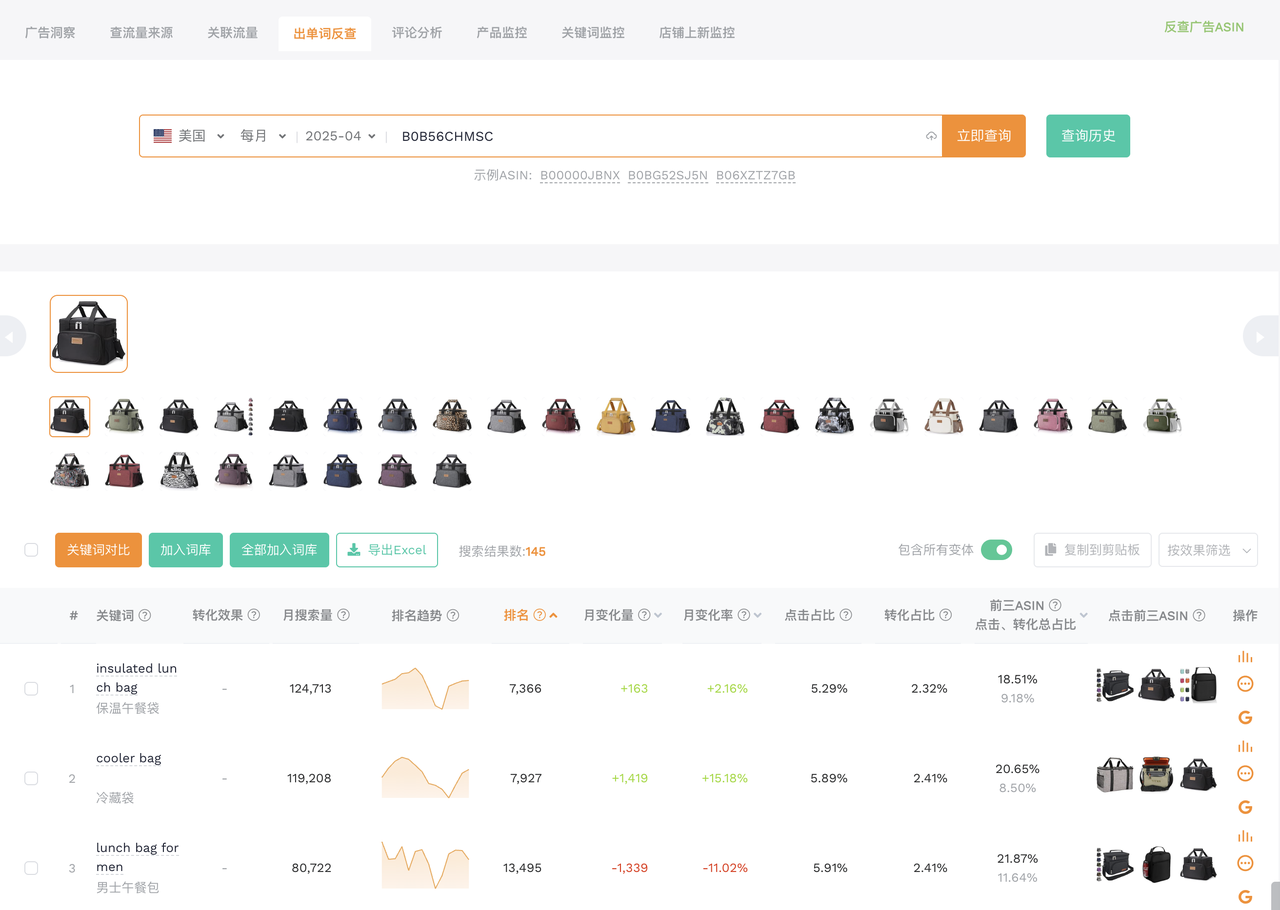
反查Top流量词(【出单词反查】功能),是通过ASIN查询进入过点击排名前3的关键词。
这个功能的数据来源于亚马逊后台品牌分析(Brand Analytics)中最近一周的关键词搜索报告,收录的是各关键词下点击排名前3的ASIN。所以当我们通过ASIN反查出单词时,只有该ASIN在对应关键词下进入到点击排名前3时这个关键词才会被收录进来,更适用于头部Top产品的查询。
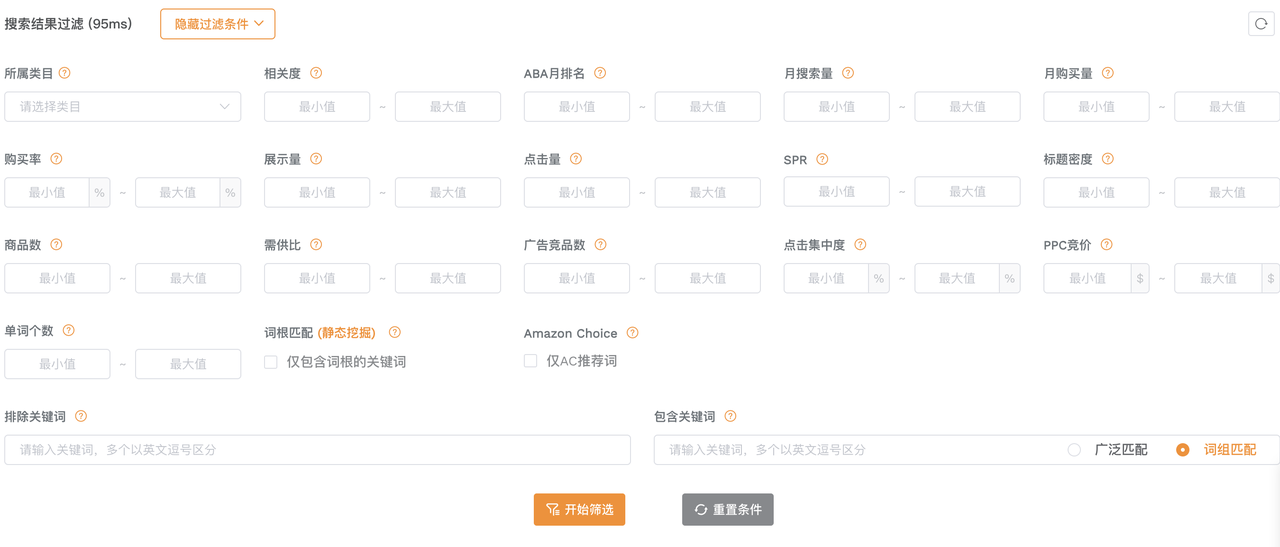
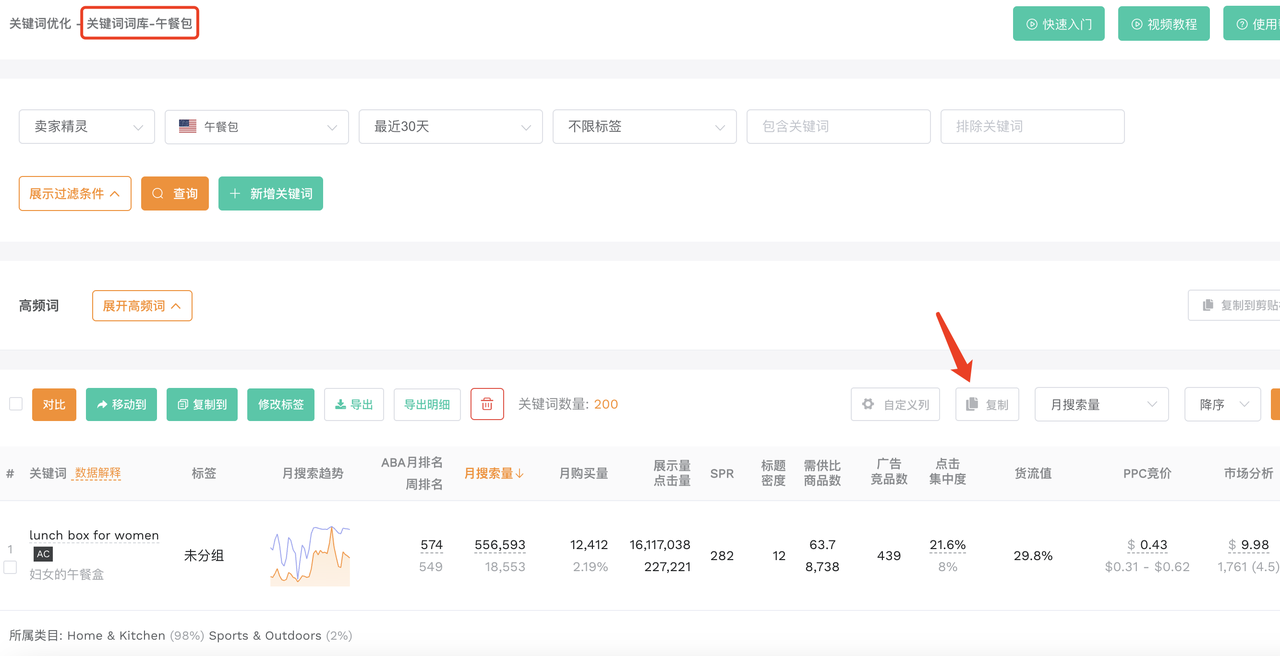
需要注意的是,在通过以上方法收集关键词搭建关键词词库时,会出现关键词太多太泛的情况,查询结果动不动就是几千+。所以可以通过填写过滤条件,剔除掉其中流量过小等表现不好的关键词,进一步缩小关键词词库的范围。
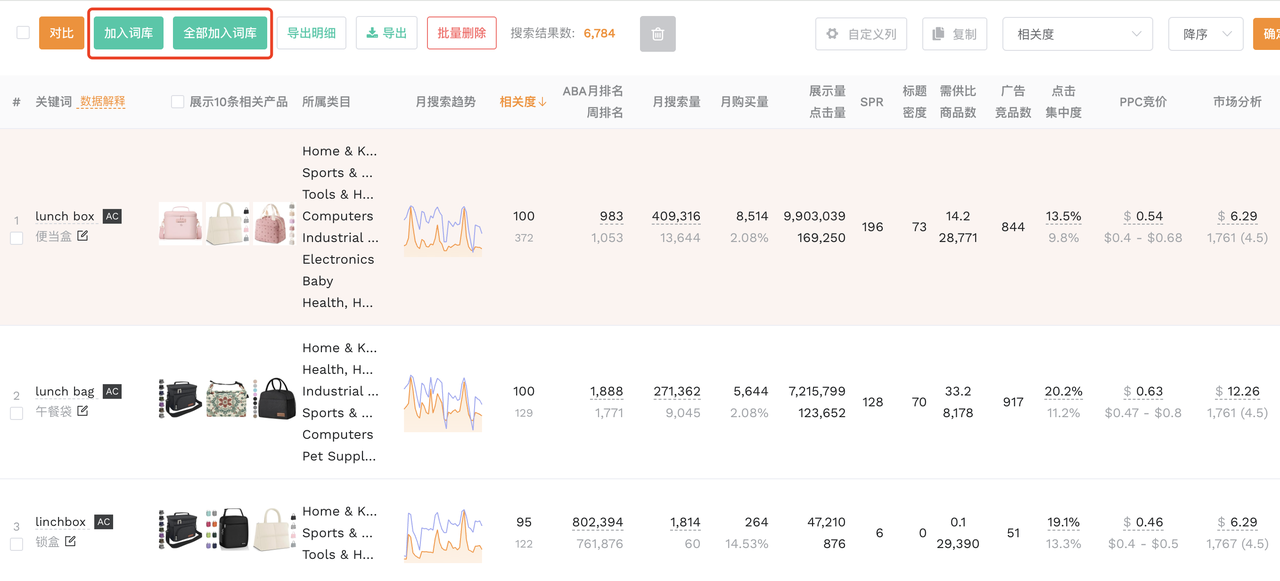
然后将剩下的关键词批量【加入词库】,形成一个初始的关键词词库。在将关键词加入词库时,如果遇到重复的词,系统会自动去重。
三、筛查关键词相关性
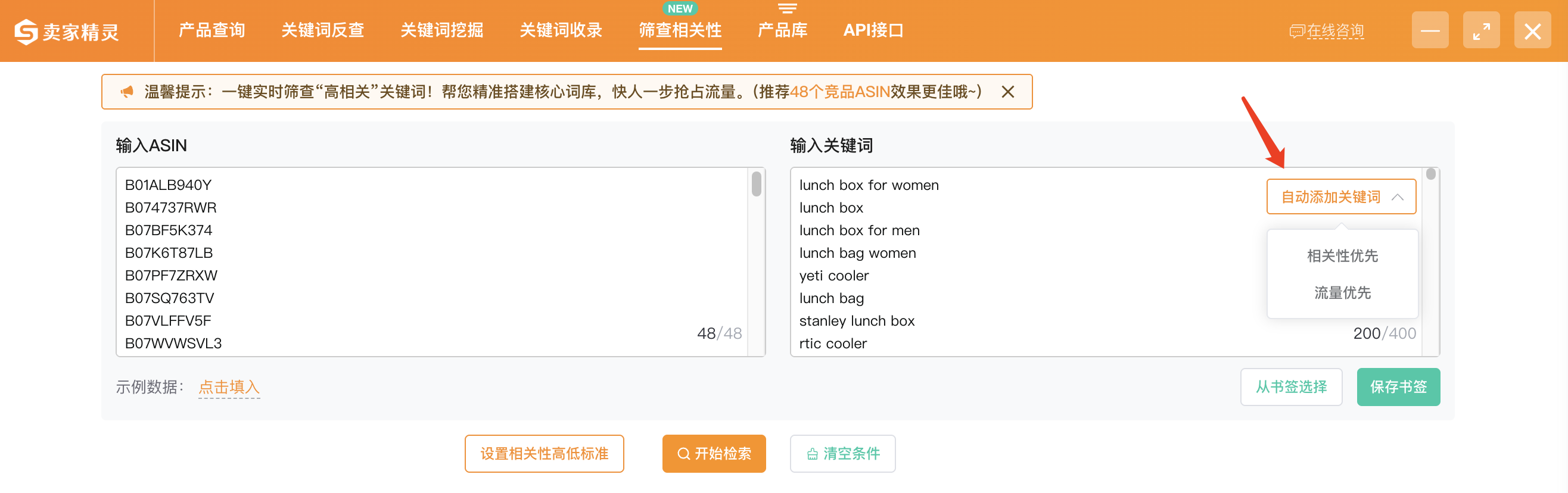
如果你还没有来得及准备词库,这里我们也提供了自动推荐关键词,也就是通过左侧的ASIN进行拓展流量词来作为待筛查的关键词。
并且支持两种推荐方式:
- 相关性优先:按照「相关 ASIN 数量」(主要规则)和「搜索量」(次要规则)优先推荐关键词
- 流量优先:仅按照「搜索量」优先推荐关键词
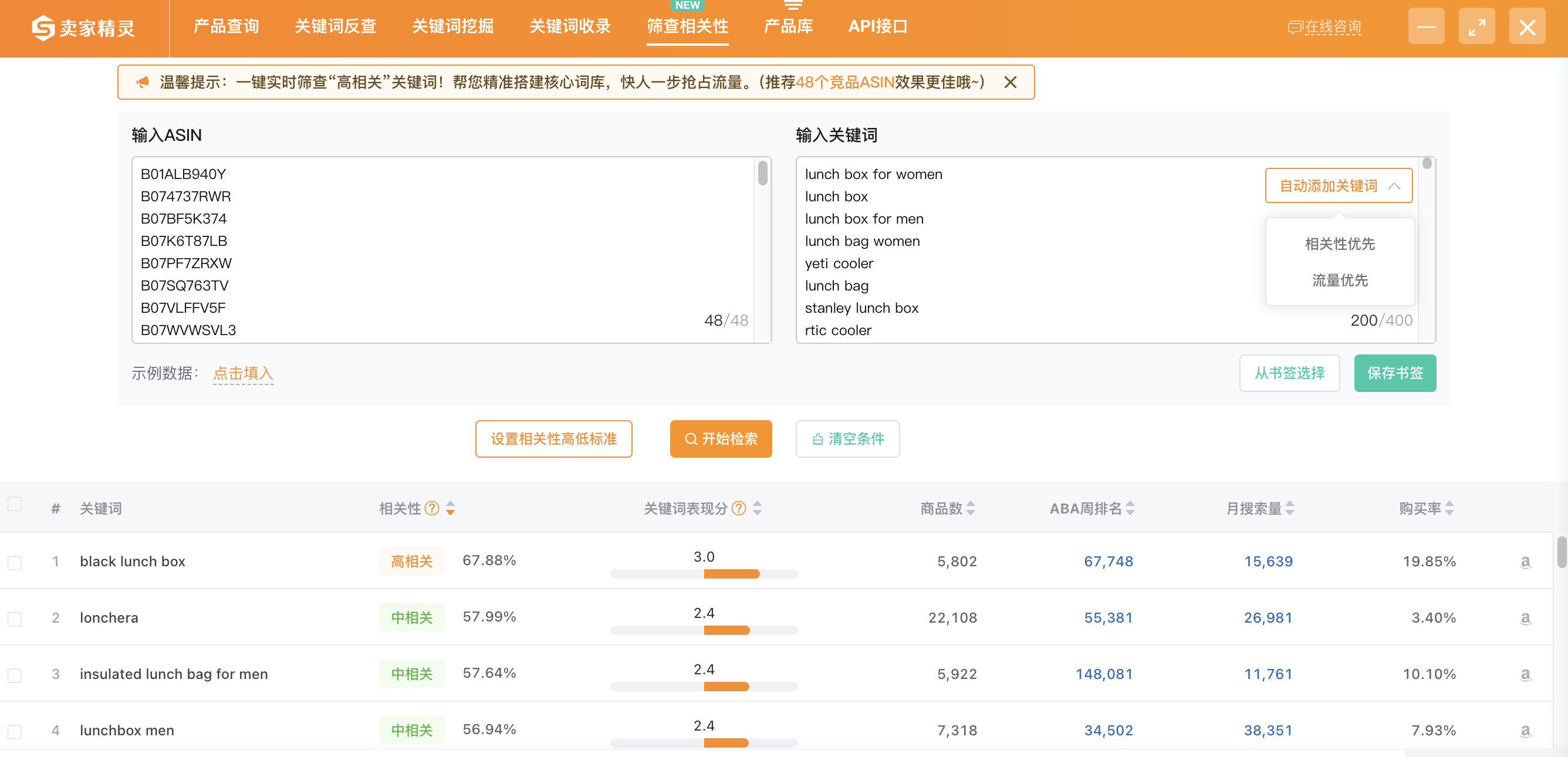
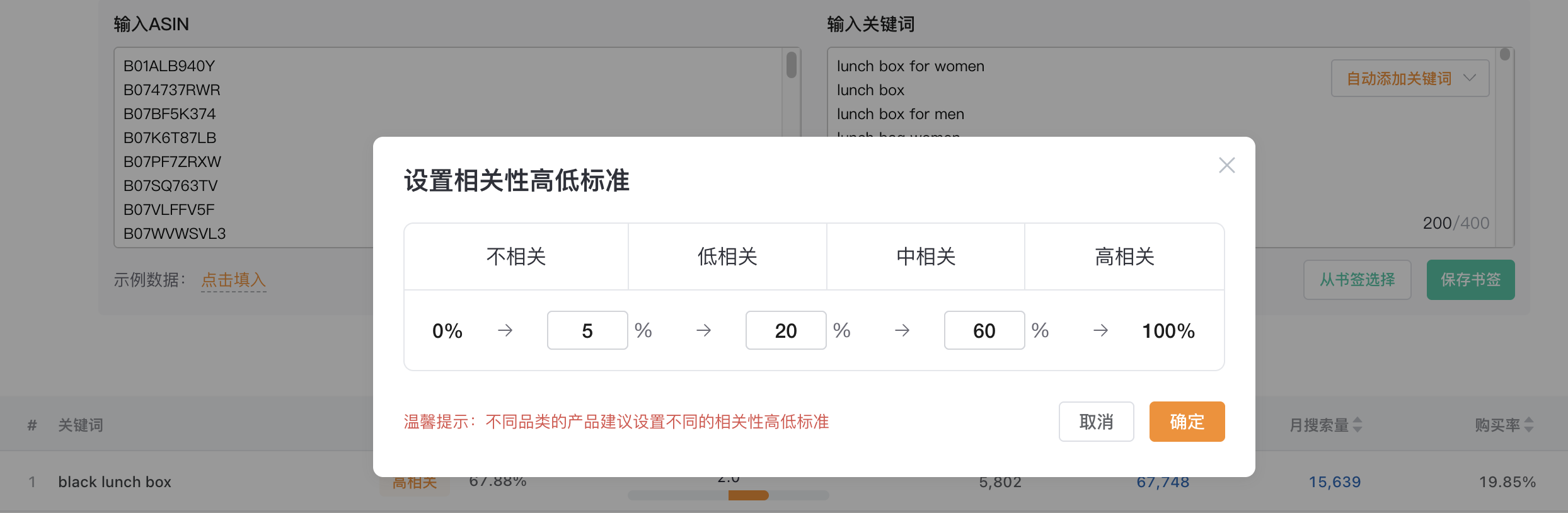
综合占位率≥ 60%,则会被标记为【高相关】,代表这个关键词下的大部分产品都与你的产品高度相似:可作为核心投放词,优先用于标题、广告;
综合占位率在20%-60%区间内,则会被标记为【中相关】,代表这个关键词下的一部分产品与你的产品高度相似:补充词,可测试效果;
综合占位率在5%-20%区间内,则会被标记为【低相关】,代表这个关键词下只有少部分产品与你的产品高度相似:谨慎使用,可能流量不精准;
综合占位率<5%,则会被标记为【不相关】,代表这个关键词下只有极少或者几乎没有产品与你的产品高度相似:直接剔除。
以上是系统默认的相关性高低的划分标准,还支持自定义设置相关性判断的区间,根据自己品类的实际情况进行灵活调整。
除了相关性以外,我们还提供了关键词表现分(同组关键词对比)、商品数(竞争强度)、ABA周排名/月搜索量(流量潜力)和购买率(转化能力)等数据可以结合起来辅助进行关键词筛选。
关键词表现分计算原理:点击查看
比如相关性为中相关或高相关,月搜索量较大的关键词可以拿来作为核心大词,月搜索量一般、但相关性极高的关键词就可以拿来做精准投放。

真诚点赞,手留余香
网友评论
全部评论 (2) / 我的评论 (2)
最新 (2) / 最热 (2)